
 EN

Paper Cup Making Machinery Uses in Plants
In a cup plant, paper cup making machinery is not just the machine at the center of the floor. It is the point where printed blanks, bottom rolls, heat or ultrasonic sealing settings, inspection routines, and packing discipline meet. From an operations observer’s perspective, the useful question is not “How fast can it run?” but “Can this paper cup making machinery keep a stable rhythm with the materials and people around it?”
That distinction matters for startups, contract packers, and established food-packaging plants alike. A line can look productive during a short demonstration yet create avoidable stoppages when paper stock changes, a cup size is switched, or finished cups begin to accumulate before packing. Well-matched paper cup making machinery helps the team turn a defined cup specification into a repeatable production process.
Where paper cup making machinery fits in a plant
The core job of paper cup making machinery is to form a cup body from prepared materials and move it through joining, bottom insertion, sealing, knurling, rim curling, and discharge. The exact sequence and controls vary by configuration, but the plant workflow around the equipment is just as important as the forming stations themselves.
- Material handoff: operators verify that cup blanks and bottom stock match the scheduled size, print orientation, coating, and storage condition before they enter paper cup making machinery.
- Forming and sealing: the machine turns the blank into a body, joins the side seam, adds the bottom, and applies the selected sealing process.
- Shape retention: knurling and rim curling support the finished cup’s bottom joint and drinking edge.
- Inspection and packing: discharge must feed a realistic inspection, counting, sleeving, and carton-packing routine rather than simply moving cups off the machine.
This view prevents a common planning error: treating paper cup making machinery as an isolated purchase. In practice, output is limited by the slowest handoff. A capable former cannot compensate for inconsistent blanks, delayed bottom-roll replenishment, or an understaffed packing station.
Plant uses beyond basic cup forming
Running dedicated cup programs
For plants with a stable menu of hot-drink, cold-drink, or food-service cup sizes, paper cup making machinery can anchor a dedicated production cell. The team can define material locations, first-piece checks, sampling intervals, and packing quantities around one recurring specification. This makes it easier to see whether a change in rejects comes from material handling, forming settings, or the downstream work area.
Supporting mixed-size production
Plants that produce several cup diameters or heights use paper cup making machinery differently. Changeover readiness becomes a planned task: confirm the tooling list, blank dimensions, bottom size, guide positions, and inspection samples before the previous order ends. The right setup for this environment is not simply the one with an attractive stated rate. It is the one whose changeover process the plant can perform consistently and document.
Integrating branded or printed cup work
When printed blanks arrive from an upstream supplier or an in-house print workflow, paper cup making machinery becomes part of a visual-quality process as well. Operators should check print orientation, registration around the side seam, and scuffing during handling. These checks do not require a claim about a particular model; they are practical acceptance points that keep a customer’s artwork from becoming an afterthought at the forming stage.
Why material compatibility deserves attention
Paper cup making machinery is selected around a product specification, not around a generic word such as “paper.” Cupboard structure, coating type, blank geometry, and intended use influence how a cup body forms and how seams are evaluated. For food-contact applications, the plant also needs to confirm that the chosen paperboard, coating, inks, and process records fit the requirements of the destination market. For example, U.S. regulations include 21 CFR 176.170 for certain paper and paperboard components used in contact with aqueous and fatty foods; this is a material-compliance question, not a blanket approval for a machine.
A practical trial plan for paper cup making machinery uses the actual or representative production material. During the trial, record the cup format, material identification, seam appearance, bottom attachment, rim finish, and any adjustments made. That record gives purchasing and production teams a common basis for evaluating a latest paper cup making machine rather than relying on a generic demonstration.
Quality checks that belong beside the machine
Because the side seam and bottom joint are connected to leak resistance, paper cup making machinery should be paired with a clear inspection routine. The routine does not need to be elaborate, but it should be repeatable across shifts.
- Approve a first piece after setup and retain it as the reference sample.
- Check side-seam overlap, bottom-seat appearance, knurling, and rim curl at scheduled intervals.
- Use a plant-defined leak or functional test suited to the cup’s intended use and material.
- Separate suspect cups, record the condition, and identify whether the likely cause is material, adjustment, handling, or wear.
- Review rejects alongside run time and changeover notes before changing the next production plan.
This is where paper cup making machinery becomes measurable plant equipment rather than a black box. A report that links defects to conditions is more useful than a report that lists only total output.
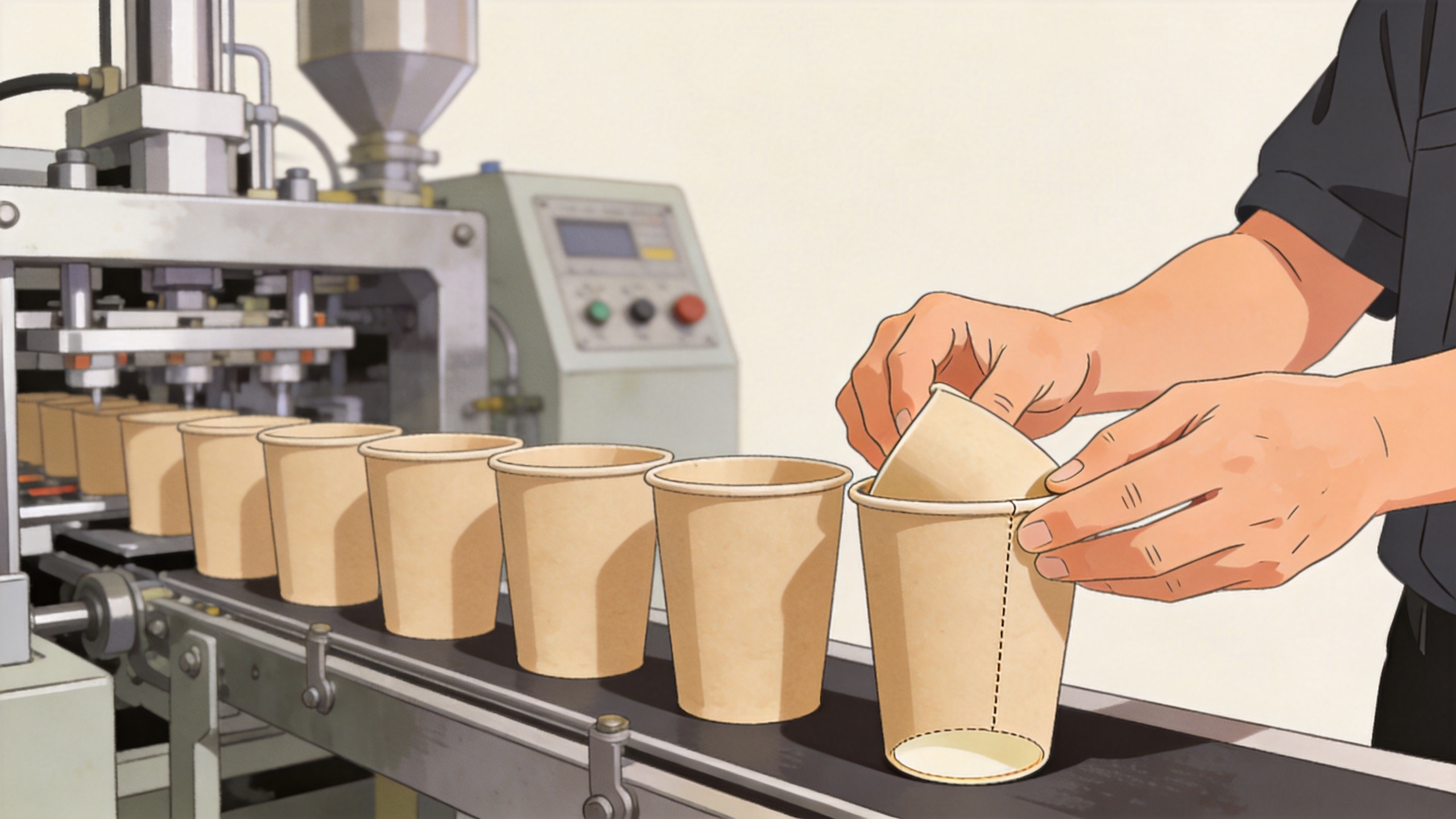
How to evaluate a paper glass banane ki machine request
Buyers searching for a paper glass banane ki machine may be comparing a compact entry point with a larger plant requirement. Start by translating the request into operating facts: cup sizes, material structure, expected order mix, available utilities, operator skill, floor space, inspection method, and packing plan. Then ask the supplier to explain what must change between sizes and which acceptance samples will be used.
For a plant evaluating paper cup making machinery, the request for information should also cover training, routine maintenance access, spare-parts planning, and commissioning boundaries. These details shape uptime more directly than a brochure headline. They also help the plant decide whether one former, additional tooling, or a staged expansion fits the actual order profile.
A practical selection checklist
- Match paper cup making machinery to the cup formats and materials you will actually run first.
- Map the upstream blank supply and downstream packing capacity before setting a production target.
- Ask for an acceptance plan with agreed sample checks instead of relying only on nominal speed.
- Confirm how operators will replenish materials, remove finished cups, clean the work area, and record adjustments.
- Plan changeovers around tooling, material identification, and first-piece approval.
For ZheJiang RUIDA Machinery Co., Ltd., discussions about paper cup making machinery can focus on the cup-forming workflow, material fit, and project questions that need confirmation before configuration. That approach is especially useful when a buyer is comparing a latest paper cup making machine for a new line or expanding an existing plant.
Final perspective
The most useful paper cup making machinery is the equipment that fits a defined plant system: suitable materials enter on time, operators can verify cup quality, changeovers are understood, and packing keeps pace with discharge. By evaluating the forming process together with material control, inspection, and handoffs, a plant can make a more grounded decision and build a production routine that is easier to manage over time.
 ONLINE