
 EN

What Is Paper Cup Making Machinery Technology?
From a packaging-equipment selection perspective, paper cup making machinery is the coordinated technology used to turn prepared paperboard blanks into formed, sealed, usable cups. It is more than a single forming station. A practical line brings together material feeding, sidewall shaping, bottom insertion, sealing, rim finishing, inspection, and discharge. Understanding those linked operations gives a buyer a clearer way to discuss requirements with a supplier.
That distinction matters because a machine description alone does not establish whether it suits a particular job. Cup diameter, height, blank geometry, paperboard construction, barrier treatment, target output, changeover frequency, and the required inspection method all affect the final configuration. If paper stock and cup design are already known, the technology discussion becomes far more useful.
What the technology does
At its core, paper cup making machinery converts a flat, die-cut sidewall blank into a tapered or straight cup body, adds a bottom blank, and closes the critical seams. The equipment uses timed mechanical movement, heat or other applicable sealing methods, tooling, sensors, and controls to keep each operation synchronized. Depending on the application, upstream printing and die cutting may be separate processes; the cup-forming machine normally begins with blanks or prepared material that meets the agreed specification.
The phrase coffee paper cup making machinery usually refers to equipment configured for beverage-cup formats. It should not be treated as proof that every paperboard or barrier material will run in the same way. Material behavior, sealability, and cup geometry still need to be confirmed through technical communication and, where appropriate, production trials.
How a paper cup forming cycle works
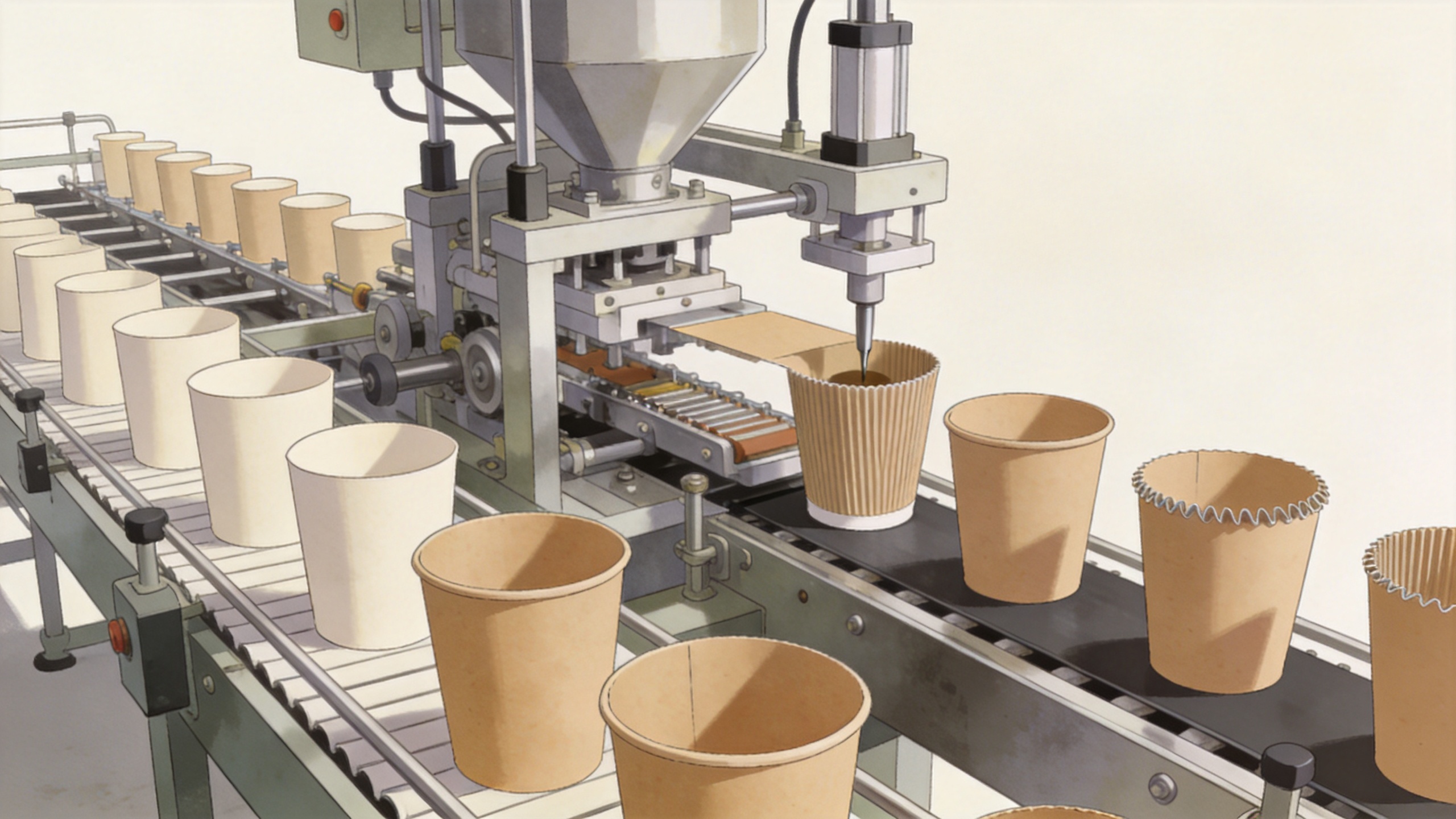
A typical paper cup making machinery cycle follows a connected sequence. The exact arrangement varies by model, but the logic is consistent: present the right blank, form the sidewall, join it accurately, insert and seal the bottom, finish the rim, then separate acceptable cups from the production flow.
- Blank feeding and orientation. A magazine or feed system presents sidewall blanks in a controlled orientation. Reliable feeding is important because a skewed blank can carry an alignment issue into later stations.
- Sidewall forming. The blank wraps around a forming mandrel or comparable tool to create the cup body. The overlap becomes the side seam and must be positioned consistently.
- Side-seam sealing. The overlapping sidewall is joined according to the material and process design. A visible seam is not automatically a defect; the relevant question is whether the seam meets the agreed integrity and appearance criteria.
- Bottom insertion and sealing. A circular bottom blank is introduced and joined to the formed sidewall. The lower edge is often mechanically worked to secure the joint. This is a critical process node because leakage resistance depends on the combined effect of material, tooling, settings, and handling.
- Rim curling and finishing. The top edge is curled to create a comfortable, stable rim. Curling also provides a useful observation point: poor alignment or unsuitable material behavior can become more visible here.
- Inspection and discharge. Sensors, operator checks, or downstream systems can monitor selected conditions before cups are counted, conveyed, or packed.
In other words, paper cup making machinery is a sequence-control technology. A line can look fast at one station while still needing attention at the handoff between stations. That is why an evaluation should consider the whole forming path rather than only a headline output figure.
The technical elements buyers should connect
Material and sealing compatibility
Paperboard weight, stiffness, coating or barrier construction, blank dimensions, and the sealing approach must work together. For food-contact applications, the material system and intended market requirements should be checked separately from the machinery discussion. A machine supplier can explain the operating concept, while the buyer should also confirm the compliance documentation and intended-use boundaries for the chosen cup material.
When discussing paper cup making machinery, ask which sample blanks have been evaluated, what material details are needed for a trial, and how changes in stock may affect setup. A cup issue may not originate in the equipment; material variation, tooling condition, and operator setup can all be relevant.
Tooling, cup range, and changeovers
One common mistake is selecting by cup volume alone. Two cups with similar nominal volume can have different diameters, heights, bottom dimensions, or sidewall layouts. Those differences may change the tooling and setup requirements. If a project will run several formats, ask for a format list, the components that change, the skills required, and the confirmation method for each changeover.
This also explains why paper cup making machinery should be compared against the intended production mix. A stable single-format program and a schedule with frequent size changes can prioritize different features. The relevant trade-off is not simply speed versus a slower option; it is the fit between output rhythm, changeover expectations, and the team’s ability to verify the setup.
Automation and process visibility
Automation can reduce repeated manual handling, but it does not remove the need for process control. A buyer should ask what signals are monitored, what happens when a blank is missing or misaligned, how rejected cups are handled, and which settings operators may adjust. Clear fault information and accessible cleaning points can make routine work easier to organize.
For paper drinking vessel machinery, the same principle applies: the equipment name describes a product category, not an acceptance result. The appropriate control level depends on the cup design, material, working environment, and internal quality plan.
How to evaluate a machine demonstration
A useful demonstration of paper cup making machinery begins with agreed inputs and ends with agreed observations. Rather than asking only how many cups are produced in a minute, prepare a verification sheet. It can include the supplied blank specification, target cup drawing, sample material, start-up condition, observation period, seam appearance, bottom fit, rim condition, rejected-cup handling, and the documentation to be provided afterward.
- Bring or define the actual cup format and paperboard details.
- State whether the product is a hot-drink cup, a cold-drink cup, or another format with its own use conditions.
- Specify the expected production rhythm and whether it reflects normal running or a short demonstration.
- Ask how side seams, bottom joints, and curled rims will be observed and recorded.
- List the expected format parts, routine consumables, operator training topics, and maintenance boundaries.
These questions do not replace an on-site assessment. They make the conversation more concrete and make it easier to compare proposals on the same basis. From procurement discussions, bringing acceptance criteria forward is often more helpful than trying to resolve every question after shipment.
From machine label to an operating plan
Paper cup making machinery becomes useful when its operating conditions are written down. Start with the cup drawings and material information, then map each process node to an acceptance check. Next, identify the people responsible for feeding material, monitoring the forming path, handling deviations, and completing routine cleaning or maintenance. Finally, align the machine configuration with the actual product mix rather than an isolated maximum figure.
For a new project, a short technical brief can make the next discussion productive: desired cup formats, material construction, planned operating pattern, local food-contact obligations, desired inspection points, utilities, available space, and training needs. This gives suppliers a factual basis for proposing a configuration and gives the buyer a record of what remains to be verified.
Conclusion
Paper cup making machinery technology is the controlled transformation of prepared paperboard blanks into finished cups through forming, sealing, bottom joining, rim curling, and inspection. The right question is not which label sounds most advanced. It is whether the material, tooling, process controls, and production plan fit the cups you intend to make. If you first confirm the use case, then check cup geometry and material, and finally compare configuration details, you will have a stronger basis for a technical discussion.
 ONLINE