
 EN

Paper Production Machine Specifications: A Practical Buyer’s Checklist
A paper production machine is not specified well by speed alone. The right specification connects a paper grade, furnish, target quality, operating window, and downstream handling plan. From a technical procurement perspective, the useful question is not “What is the fastest line?” It is “What operating range can this line hold while producing the paper we intend to sell?”
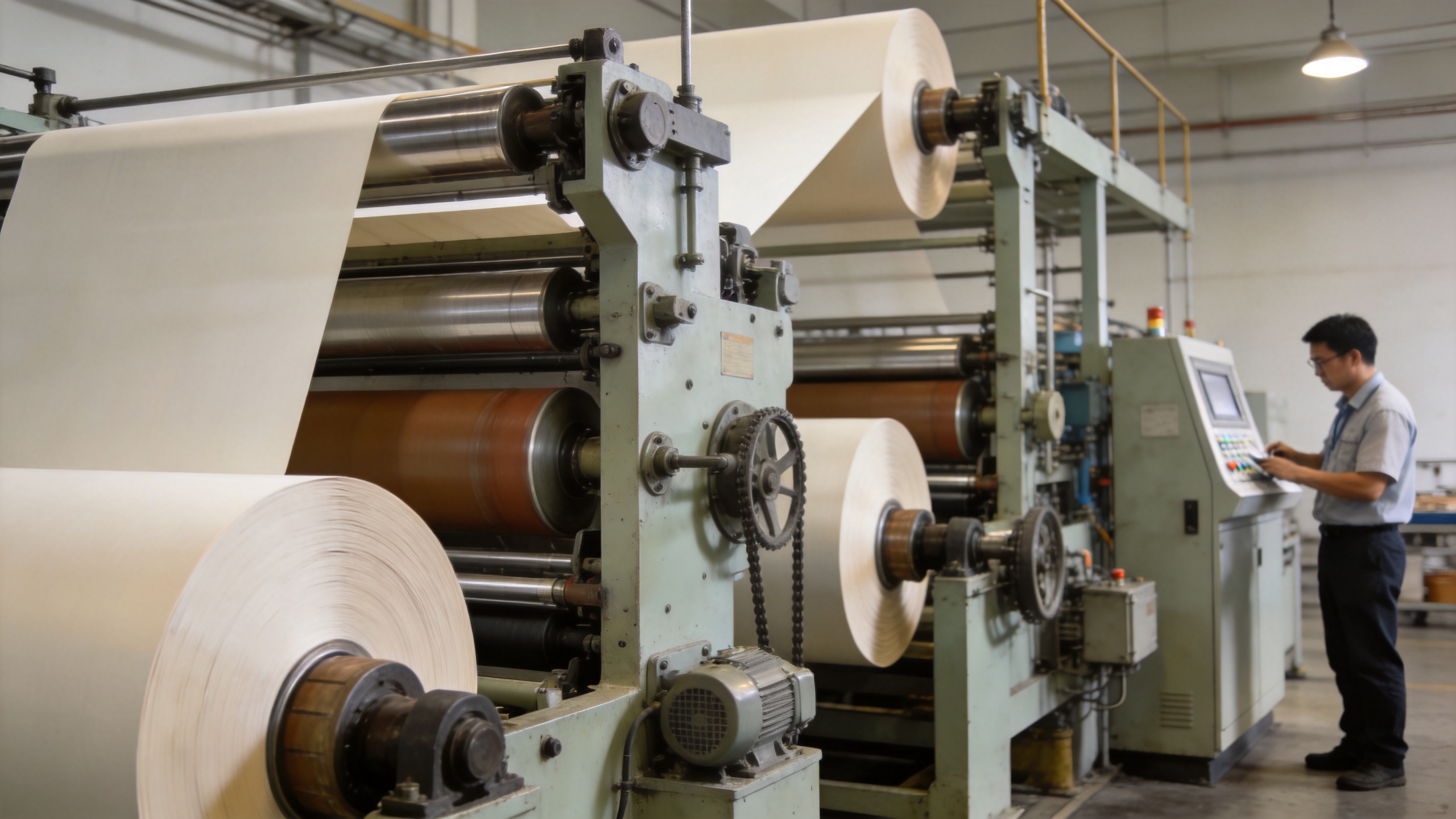
That distinction matters because the search term can describe very different equipment. A complete paper-production line turns prepared stock into a continuous sheet through forming, pressing, drying, and winding. By contrast, a wet tissue machine, a rewinder, or a cup-forming unit is normally downstream or purpose-specific equipment. Define the process boundary first; then compare specifications that belong to that boundary.
Start with the paper specification, not the machine brochure
Before requesting a paper production machine quotation, write a one-page product brief. It should state paper grade, intended end use, target basis weight, trim width, roll or sheet format, furnish, and the quality properties that decide whether a roll is acceptable. For example, packaging grades may emphasize strength, caliper, and surface treatment, while tissue grades may prioritize softness, absorbency, and converting behavior.
Basis weight needs a testing context. It is commonly expressed as mass per unit area, and results can shift when the sheet absorbs or loses moisture. ISO 187:2022 specifies conditioning paper and board at 23 ± 1°C and 50 ± 2% relative humidity before testing. That does not prescribe a particular machine; it shows why an acceptance specification should name both the quality target and the agreed test condition.
A good brief also distinguishes a production requirement from a laboratory reference. ISO 5269 methods concern laboratory sheets prepared from pulp suspensions, so they can help frame material evaluation but do not replace a production-line acceptance test.
Core paper production machine specifications to compare
1. Grade range and furnish compatibility
Ask which furnishes the paper production machine is designed to process: virgin pulp, recycled fiber, mixed furnish, or a defined blend. Fiber length, contaminants, drainage behavior, and refining response affect stock preparation and wet-end stability. A supplier should explain what must be confirmed for the intended furnish rather than treating all pulp sources as interchangeable.
2. Trim width, reel diameter, and usable web width
Trim width is a production and commercial decision, not merely a frame dimension. Check the usable web width after edge trim, the reel diameter the pope reel or winder can handle, and how the chosen width fits slitting, sheeting, or converting. If the output feeds separate paper making equipment, document the handoff width and roll-build limits so the line does not create a downstream bottleneck.
3. Design speed versus sustainable production speed
Design speed is useful, but it is not the same as saleable output. Ask for the conditions behind the number: paper grade, basis weight, moisture target, trim width, furnish, and planned efficiency. More accurately, compare the expected operating range, grade-change time, break-handling approach, and the availability assumptions used in the capacity estimate. A slightly lower speed with stable web control may fit a plant better than a headline figure that depends on unusually favorable conditions.
4. Forming, press, and drying configuration
The forming section determines how stock becomes a web; the press section removes water mechanically; and the dryer section brings the sheet toward its moisture target. When reviewing a paper production machine, ask how each section supports the intended grade. Relevant items may include headbox approach, forming concept, press loading, dryer arrangement, steam and condensate interface, ventilation, and web threading. The correct configuration depends on grade and operating goals, so these are discussion points to verify rather than universal minimums.
5. Drive, control, and measurement architecture
Specification sheets should identify the drive arrangement, control platform, safety functions, operator interfaces, and instrumentation scope. For quality control, clarify which measurements are online, where they are located, how they are calibrated, and which measurements remain laboratory checks. Buyers should also clarify data ownership, alarm records, spare-part support, and the responsibilities for commissioning interfaces.
Turn machine specifications into acceptance criteria
A practical purchase specification makes each important claim testable. Instead of asking for “good quality” or “high automation,” build an acceptance table before technical negotiations.
| Specification area | What to define | How to verify |
|---|---|---|
| Paper grade | Furnish, basis-weight range, trim width, and end use | Approved samples and agreed test methods |
| Output | Operating speed, efficiency assumption, and production period | Site acceptance run under stated conditions |
| Quality | Moisture, basis weight, caliper, strength, or other grade-relevant properties | Conditioned samples and documented measurements |
| Utilities | Electrical supply, steam, water, air, drainage, and ventilation interfaces | Interface list and commissioning review |
| Serviceability | Wear parts, lubrication, access, training, and response expectations | Maintenance plan and spare-parts list |
This format prevents a common mistake: comparing two paper production machine offers using different definitions of capacity. If one supplier quotes dry tons under a narrow grade range and another quotes calendar output without an efficiency assumption, the figures are not comparable.
Where a wet tissue machine fits in the specification
A wet tissue machine should be specified as a separate production or converting scope unless the supplier has explicitly defined it as part of an integrated line. Clarify substrate format, impregnating or lotion system where applicable, folding or cutting requirements, packaging interface, hygiene controls, and changeover needs. The parent-roll quality and the converting requirements must meet at a documented interface; neither side should be assumed from a generic paper-machine specification.
Questions to ask before approving a proposal
- Which paper grades and furnish conditions are included in the performance proposal?
- What are the stated operating speed, usable trim width, and quality targets during the acceptance run?
- Which utilities, foundations, ventilation, and drainage items are included or excluded?
- Which quality measurements are online, and which are laboratory measurements?
- What training, commissioning, documentation, and recommended spares are included?
- How will the line interface with downstream paper making equipment or a wet tissue machine?
Make the specification a working document
The strongest paper production machine specification is revised as the project becomes clearer. Begin with the product brief, convert it into measurable operating and acceptance conditions, and review every interface with engineering, production, quality, and maintenance stakeholders. If the intended paper grade, input furnish, or downstream conversion route changes, update the document before the change becomes an expensive field modification.
In short, choose a line by its ability to achieve a defined paper result under defined conditions. That approach produces a clearer quotation comparison, a more useful factory acceptance test, and fewer surprises at commissioning.
 ONLINE