
 EN

Paper Production Machine Uses in Mills
A paper production machine is not simply one piece of equipment at the end of a mill floor. It is the coordinated production system that turns prepared fiber stock into a continuous web, removes water, stabilizes the sheet, and sends usable paper to finishing or converting. From an operations perspective, the useful question is not “What speed can the machine reach?” but “Which mill task must the line perform reliably, with this furnish, grade, and downstream demand?”
Where a Paper Production Machine Fits in a Mill
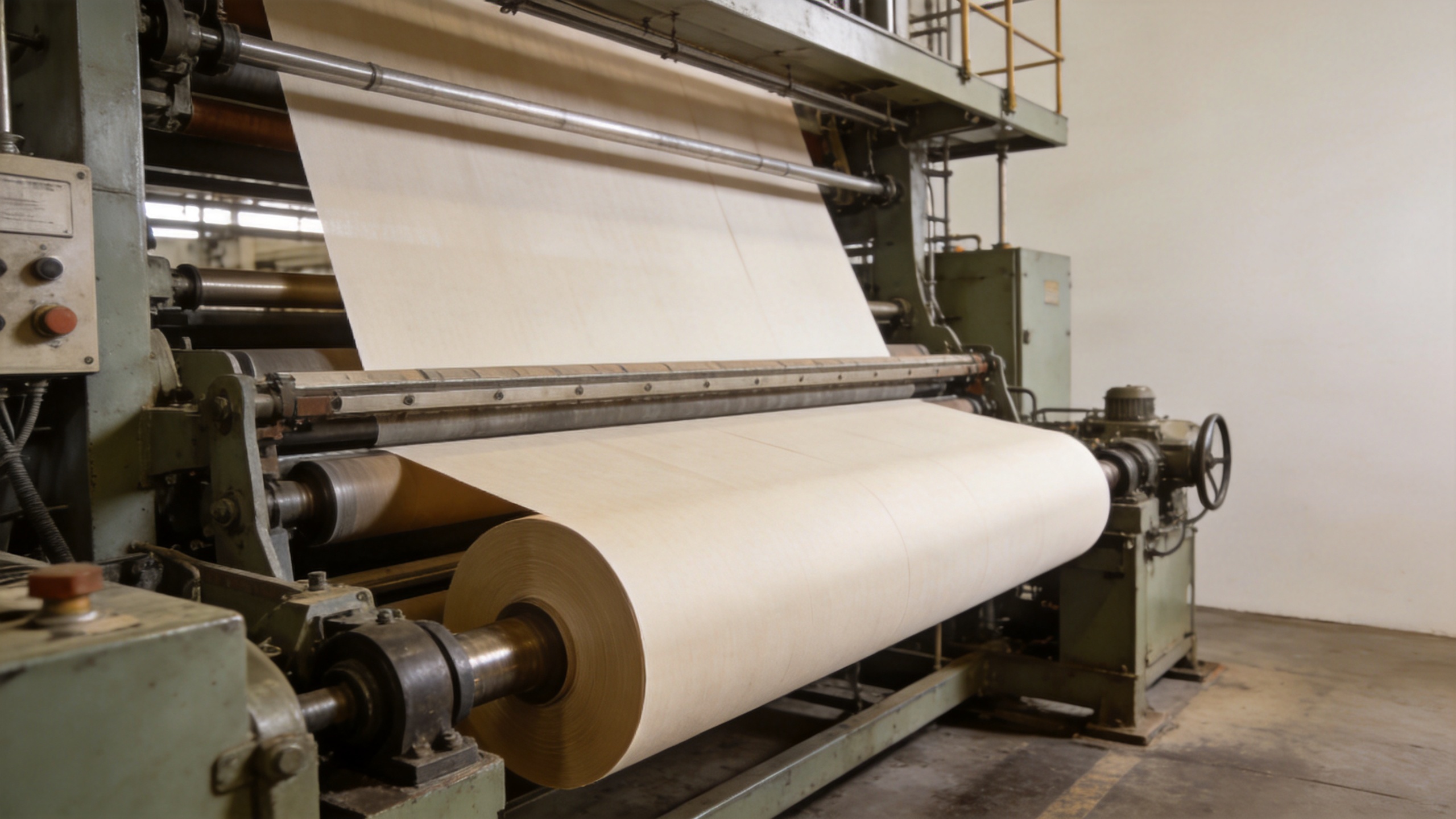
In broad terms, a paper production machine takes fiber slurry from stock preparation and forms it into a sheet. The wet end distributes stock across a moving fabric so water can drain and fibers can form a web. The web then passes through pressing, drying, and finishing stages before it is wound for shipment, storage, or further conversion.
Not every mill uses the same arrangement. The exact sections, controls, and finishing equipment depend on the paper grade. Still, the handoff between sections is a practical way to understand how a paper production machine is used day to day.
1. Forming the Sheet From Fiber Stock
The first central use of a paper production machine is sheet formation. Stock enters the machine through a delivery system designed to distribute fibers across the machine width. On the forming fabric, water drains while the fibers begin to interlock. The aim is not merely to remove water; it is to establish a stable, even web that can survive the rest of the process.
For mill teams, this area is where furnish preparation and machine operation meet. Changes in stock consistency, fiber mix, cleanliness, or flow behavior can appear later as formation variation, weak edges, breaks, or uneven moisture. In other words, a visible problem at the reel may have started upstream. It is more useful to trace the operating path than to assume the final section caused every defect.
Before making speed changes, operators typically need to confirm the intended grade, target basis weight, fiber characteristics, and the condition of the forming fabric. A paper production machine is most useful when those input conditions are understood rather than treated as fixed background details.
2. Removing Water in the Press Section
After formation, the web still contains substantial water. The press section of a paper production machine removes more moisture mechanically with rolls and supporting felts. This use is important because effective mechanical dewatering reduces the drying load that follows and helps create a sheet with enough strength for transfer.
There is a useful operational reminder here: higher speed does not automatically mean better output. A stable press transfer, predictable moisture profile, and fewer breaks may support more dependable production than a speed increase that adds variability downstream.
3. Drying and Conditioning the Web
The drying section gives a paper production machine one of its most visible mill uses: bringing the sheet toward the moisture condition required for finishing, winding, and end use. Paper machines commonly use a sequence of heated drying cylinders, with ventilation and control practices tailored to the grade and line design.
This section also shows why a paper production machine needs coordinated maintenance. Dryer surfaces, steam and condensate systems, fabrics, and web handling each affect the production path. A maintenance plan should specify what is inspected, what is measured, and what change triggers an escalation—not simply list components.
4. Producing Parent Rolls for Tissue Conversion
For tissue-oriented operations, the paper production machine produces the base web or parent roll that later enters converting. A wet tissue machine, by contrast, is generally part of a downstream route that prepares, folds, treats, cuts, or packs wet-wipe products. The two terms can appear together in purchasing discussions, but they do not describe the same production task.
That boundary is worth clarifying early. A mill planning tissue output needs to define whether it is producing parent tissue rolls, converting dry tissue, or making finished wet-wipe products. Each route has different material handling, hygiene, packaging, and validation needs. Calling every stage a “paper machine” can obscure those differences and lead to incomplete equipment discussions.
When parent-roll quality is the goal, the mill should focus on the properties required by the next process: roll build, moisture consistency, sheet strength, softness targets where relevant, and compatibility with the intended conversion method. Those conditions should be written into the operating and acceptance discussion rather than inferred from a general machine label.
5. Supplying Paper for Bag and Packaging Conversion
A paper production machine can also serve mills that supply paper to bag and packaging conversion. In this workflow, the mill makes the paper roll or sheet; an automatic paper bag machine normally performs a later converting task, shaping and joining paper into bags. The downstream machine’s needs influence the properties that the mill should control, but it does not replace the primary sheet-production line.
For example, the mill may need to discuss strength, runnability, surface behavior, and roll handling with the converting team. The exact priorities depend on the bag style, paper grade, adhesive process, printing requirements, and storage environment. These are project-specific conditions, so they should be confirmed with samples and process trials rather than promised as universal outcomes.
This upstream-downstream view helps teams avoid a common mismatch: selecting or operating the paper production machine around a broad output claim while leaving conversion requirements unspecified. The better approach is to start with the finished use, translate it into paper properties, then check whether stock preparation, forming, pressing, drying, and winding can support those properties consistently.
6. Supporting Quality Control and Problem Solving
Another major use of a paper production machine is as the operating platform for quality control. Measurements taken through the line can help teams connect sheet variation with conditions at the wet end, press section, dryer section, or reel. The goal is not to collect data for its own sake. It is to make troubleshooting more specific.
A practical review can follow the sheet rather than jump straight to the last visible defect:
- Confirm the target paper grade and the downstream use of the roll.
- Check whether stock, additives, and flow conditions are stable before formation.
- Observe web transfer, drainage, and break patterns through the wet end and press section.
- Compare moisture, tension, and sheet behavior through drying and finishing.
- Review winding, roll handling, and feedback from the converting or customer-facing process.
This sequence does not substitute for mill-specific technical procedures. It does, however, prevent a narrow diagnosis. Paper issues may arise from more than one machine setting; material variation, operating routines, and the interaction between sections can matter just as much.
How to Match Machine Use to the Mill’s Output Plan
Before treating a paper production machine as the answer to a capacity or product problem, define the output plan in operational terms. Useful questions include:
- Which grades and basis-weight ranges will the mill run?
- Is the target a parent roll, finished sheet, tissue base, or paper for later conversion?
- How often will the grade, furnish, or roll specification change?
- Which quality characteristics are essential for the next process?
- What operating data, maintenance access, training, and acceptance checks are required?
These questions turn a broad equipment discussion into a usable production plan. If the mill has multiple output routes, a staged review is often safer: verify the base-paper process first, then validate the downstream conversion interface. That approach makes it easier to identify where an issue begins and where a configuration decision needs more evidence.
Conclusion
The main value of a paper production machine in a mill is its ability to connect fiber preparation, sheet formation, water removal, drying, finishing, and winding into a controlled production path. Its uses extend beyond making paper: it supports parent-roll supply, packaging-grade preparation, process monitoring, and clearer coordination with converting operations.
Whether the output will feed a wet tissue machine, an automatic paper bag machine, or another downstream process, start by defining the finished use and the paper properties it requires. Then evaluate the full line—not only a headline speed or isolated feature. That is the more reliable way to align machine use with mill performance and product requirements.
 ONLINE