
 EN

Where Paper Converting Machine Trend Is Moving?
For a buyer, the useful question is not whether a paper converting machine will become more automated. It already is. The more practical question is which changes will make a line easier to run with your materials, crew, order mix, and quality expectations. Across slitting, rewinding, sheeting, printing, die cutting, folding, and paper-cup production, the direction is toward connected, controllable equipment rather than isolated high-speed machines.
That distinction matters. A fast machine that creates difficult changeovers, uncertain tension control, or opaque faults can add work elsewhere in the plant. A well-matched paper converting machine, by contrast, makes the production rhythm more visible and more repeatable. From a B2B purchasing perspective, the trend is moving toward evidence-based configuration: define the material and finished product first, then verify the line response under realistic conditions.
Trend 1: Automation is shifting from speed claims to stable production flow
Servo drives, automatic registration, web-guiding systems, and programmable recipes are increasingly discussed as a single automation package. Their value is not simply that fewer manual adjustments are needed. The better test is whether they help the paper converting machine maintain a stable sequence from unwinding through the final count, stack, roll, or formed product.
Modern converting-industry coverage commonly identifies servo automation, vision inspection, connected diagnostics, and energy efficiency as technology directions. Those labels should not be treated as a substitute for a trial. Ask what action the system takes after it detects a deviation, which adjustments remain manual, and how an operator sees the cause of a stop. In many projects, a clear alarm history and a sensible recovery path matter more than adding another automatic function.
For paper-cup and food-packaging operations, this may mean checking the whole rhythm: blank feed, forming, inspection, collection, and packing handoff. A machine does not work alone; its output must suit the next station. That is why buyers are looking beyond a headline cycle rate and asking for a line-level explanation.
Trend 2: Material flexibility is becoming a purchasing requirement
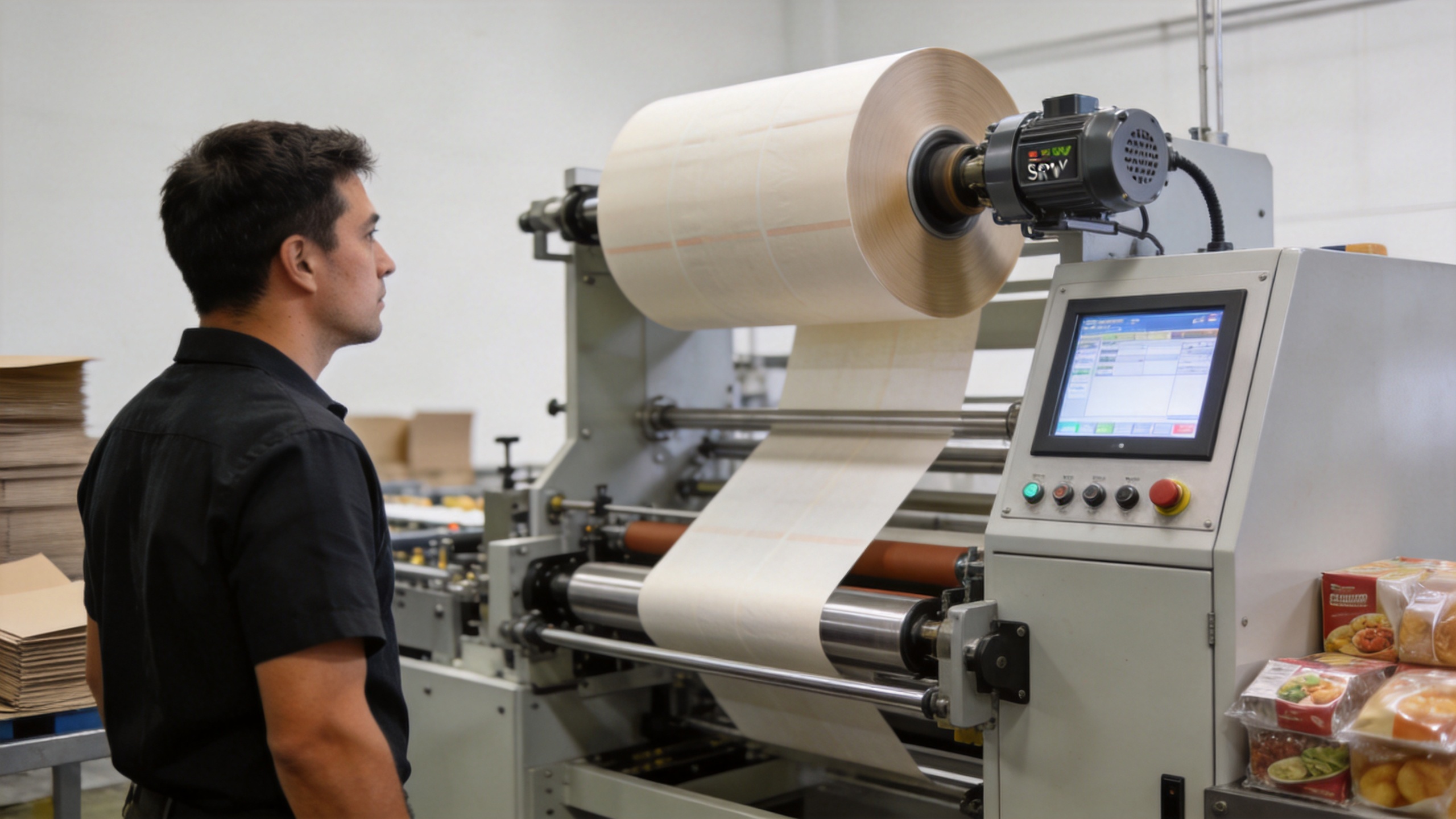
Packaging demand is pushing converters toward recyclable paper, board, kraft grades, coated stocks, and shorter production runs. These materials do not necessarily behave alike. Basis weight, stiffness, moisture condition, surface treatment, roll build, and print coverage can all change how a web travels. As a result, tension control, feed geometry, and setup repeatability are moving closer to the center of a paper converting machine specification.
A sensible procurement discussion starts with samples and variability, not with a generic material name. Provide the supplier with representative rolls or blanks where possible. Then agree on the points to observe: tracking, wrinkles, cut quality, registration, forming consistency, waste at startup, and recovery after a splice or changeover. This approach is especially important when a line must handle both a stable core product and occasional custom orders.
Buyers sometimes assume that more settings equal more flexibility. That is not necessarily the case. The relevant question is whether the operator can use the settings reliably. A configuration that is technically broad but difficult to repeat can be less useful than a narrower solution with documented recipes and straightforward training.
Trend 3: Inspection data is becoming part of routine process control
Vision systems and sensors are appearing more often around print quality, registration, seal areas, counts, and finished-product handling. The trend is not merely to reject bad output; it is to find patterns before a small deviation becomes a long run of waste. For a paper converting machine, that creates a new purchasing question: what information can the team actually act on?
During evaluation, ask for a practical answer to four points:
- Which defects or process conditions can the system detect?
- How are accepted and rejected units counted or recorded?
- Can the operator see a useful event history without specialist software?
- What verification is needed to confirm that inspection settings suit the real product?
There is a boundary here. A sensor does not replace process discipline, and an inspection feature should not be treated as a guarantee of finished-product quality. It becomes useful when the acceptance criteria, response steps, and operator responsibilities are agreed before commissioning.
Trend 4: Connectivity supports maintenance planning, not maintenance-free operation
Connected controls can make service conversations, fault records, and preventive-maintenance planning easier to organize. This is attractive for plants with multiple lines or teams operating across shifts. Yet a connected paper converting machine still depends on accessible wear points, sensible lubrication routines, available spares, and people who know what normal operation looks like.
Rather than asking only whether remote support is available, ask what records the machine can provide after a stop, which components are expected to need routine attention, and what backup parts should be considered at startup. A practical maintenance plan separates daily checks, scheduled inspections, and parts that need longer procurement lead times. That conversation is often more useful than a broad promise of predictive maintenance.
What this means for paper converting machinery configuration
The next generation of paper converting machinery is likely to be judged on controlled flexibility. Buyers need equipment that can support a defined mix of materials and formats without turning every change into an engineering exercise. That points to several configuration priorities:
| Decision area | What to verify | Why it matters |
|---|---|---|
| Web and material handling | Representative substrate, tension path, and feed response | Material variation can affect downstream quality and waste. |
| Changeover | Steps, tooling, recipe control, and time assumptions | Frequent format changes can reshape the real capacity picture. |
| Automation | Automatic action, manual intervention, and fault recovery | Automation should simplify operation instead of hiding problems. |
| Inspection | Detection scope, acceptance criteria, and response workflow | Data only helps when the team can make a decision from it. |
| Service readiness | Training, documents, spare parts, and escalation path | Availability depends on preparation after installation as well as design. |
How should buyers evaluate used paper converting equipment?
The market for used paper converting equipment will remain relevant because it can shorten acquisition time or fit a limited capital plan. However, a used machine should be evaluated as a verification project, not as a discounted version of a new one. Its prior material range, operating hours, control-system condition, tooling availability, electrical compatibility, guarding, and service records can all affect the decision.
Start by defining the required finished product and material. Then assess whether the existing configuration can demonstrate that result. Request clear information about the machine identity, major modifications, included tooling, known maintenance work, and what is excluded from the sale. If an inspection or trial is feasible, document the conditions rather than relying on a single no-load run. The lowest purchase price can become less attractive if controls are unsupported, spare parts are hard to source, or the line needs extensive adaptation before it fits the plant.
A practical next step: turn trends into a comparison brief
The direction of the paper converting machine market is toward better control, better visibility, and closer alignment between a line and its real workload. That does not mean every project needs the most advanced option. It means the buyer should compare alternatives using the same evidence: material samples, format range, expected changeovers, quality criteria, crew capability, maintenance responsibility, and acceptance conditions.
Before requesting quotations, prepare a one-page brief that lists those conditions. Include the current bottleneck, the desired output format, representative materials, utilities, and the information needed for a meaningful trial. ZheJiang RUIDA Machinery Co.,Ltd focuses on paper-cup, servo paper-cup forming, and flexographic-printing equipment; for relevant food-packaging projects, a structured requirements discussion can help clarify the configuration questions before a line is specified. The goal is not to buy a trend. It is to select a paper converting machine that can be verified against your operation.
 ONLINE