
 EN

Presenting Paper Cup Glass Making Machine
A paper cup glass making machine is not simply a purchase for making disposable drinkware. It is a production decision that connects cup design, paper stock, forming sequence, operator routines, utilities, and the way finished cups are checked before they move to packing. For food-packaging applications, the useful question is not “Which machine is fastest?” but “Which configuration fits the cup, paper, and operating plan we can actually support?”
From a food-packaging application adviser’s viewpoint, the starting point is the intended cup. Coffee, cold beverages, tasting portions, and promotional formats can call for different diameters, heights, rims, and paper constructions. A paper cup glass making machine should therefore be assessed against a written product brief before a buyer compares quotes.
What a paper cup glass making machine does
In common industry usage, a paper cup glass making machine forms a pre-cut paper blank into a cup or paper glass through a sequence of feeding, side-seam joining, bottom insertion, bottom sealing, knurling, rim curling, discharge, and inspection-related functions. The exact arrangement varies by supplier and model. That distinction matters: a feature described on one supplier page is not proof that every paper cup glass making machine includes it.
The practical output is a finished container whose shape and seams need to suit the intended beverage, filling conditions, packing method, and local food-contact requirements. A paper beverage cup equipment project also includes the material path before the former and the handling path after it. If those interfaces are ignored, a machine can be technically capable yet awkward to integrate into the full line.
Start with the cup and paper, not the headline speed
Before selecting a paper cup glass making machine, define the cup family in operational terms. Record the nominal volume, top and bottom dimensions, height, paperboard specification, coating or barrier requirement, print treatment, and whether one format or several formats will be run. These details guide the discussion of tooling, feeding, forming pressure, and changeover expectations.
Paper conditions deserve the same attention. Material stiffness, coating behavior, storage conditions, and batch variation can influence feeding and sealing behavior. It is safer to ask how the proposed paper cup glass making machine will be trialed with representative paper than to assume that a generic material description answers the question. When food-contact compliance is relevant, obtain the applicable material documentation from the material supplier and confirm the target-market requirements separately.
Follow the process nodes that shape quality
A useful evaluation follows the process rather than relying on a short feature list. At the feeding node, ask what paper blank conditions the machine expects and how operators identify misfeeds. At side-seam and bottom-forming nodes, ask which sample checks will be used during commissioning. At the rim, consider how the required drinking edge and lid fit will be assessed. A paper cup glass making machine should be evaluated with an acceptance plan that states the cup samples, checks, and recording method.
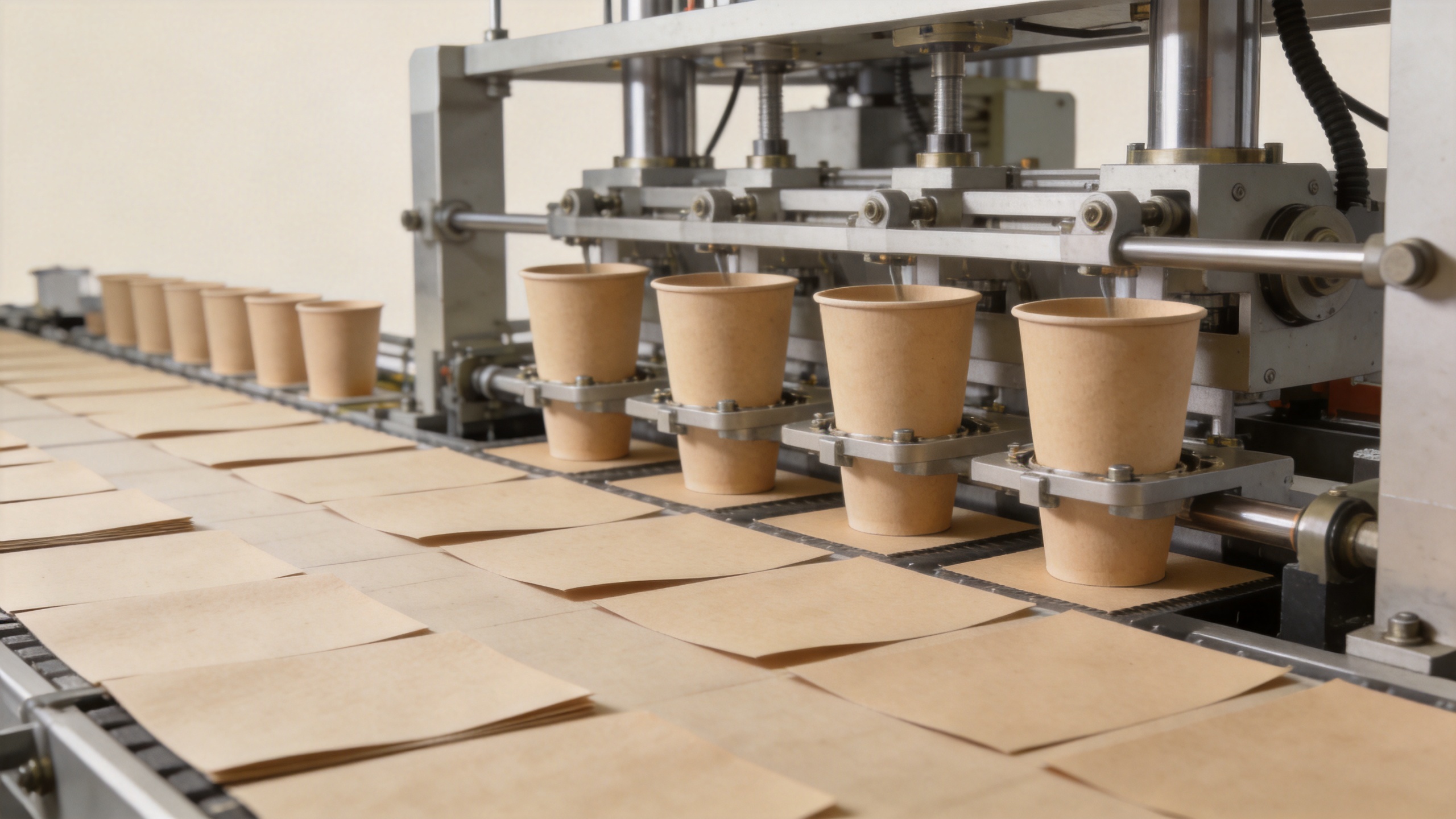
This approach also makes technical conversations more specific. Instead of requesting a vague “high-speed” solution, the buyer can ask how a proposed paper cup glass making machine handles the chosen blank, which adjustments are routine, which settings are controlled, and what evidence will be available during a test run. For a paper cup manufacturing company, those answers are more actionable than a headline output figure alone.
Balance throughput with changeover and daily operation
Speed and flexibility can both be important, but they are not automatically the same priority. If frequent cup-size changes are planned, changeover steps, tooling storage, setup records, and first-piece inspection may matter as much as nominal output. If a single format will run for long periods, the discussion may lean more heavily toward stable material supply, staffing, and downstream packing capacity. A paper cup glass making machine evaluation should make this trade-off explicit.
There is a related operational reminder: automation does not mean no maintenance. Cleaning access, lubrication points, inspection intervals, fault messages, and the availability of wear parts affect whether a line remains manageable across shifts. Ask for the recommended preventive-maintenance tasks and clarify who will train operators, maintenance personnel, and quality staff. These questions help position paper beverage cup equipment as part of a working process rather than as an isolated asset.
Check integration before placing an order
Line integration is a frequent concern for buyers. A paper cup glass making machine needs a sensible place in the layout, defined utility connections, material staging, safe operator access, and an exit path for finished cups. Consider how cups will be counted, inspected, collected, packed, and transferred. If printing, packaging, or other equipment is already present, document handoff points and responsibility boundaries early.
Quotation scope should be equally clear. Separate the base machine, tooling, optional inspection or collection arrangements, commissioning, documentation, spare-parts recommendations, and any installation support. A paper cup manufacturing company can compare proposals more fairly when each supplier responds to the same written scope. It also reduces the chance that an essential item is discovered only after delivery planning has begun.
A practical confirmation checklist
- Describe every initial cup format and the representative paper material to be used for evaluation.
- Ask the supplier to identify the forming sequence and the controls relevant to the proposed paper cup glass making machine.
- Confirm tooling, changeover procedure, cleaning access, and routine maintenance responsibilities.
- Define utilities, floor layout, material flow, finished-cup handling, and safety access points.
- Agree on sample checks and acceptance criteria before shipment or commissioning.
- Request a spare-parts recommendation and clarify documentation, training, and service communication.
How to make the next discussion productive
A paper cup glass making machine is easier to compare when the buyer shares a concise technical brief rather than only a capacity target. Include cup drawings or samples, material information, target application, format-change expectations, site utilities, and intended inspection practice. This gives the supplier a clearer basis for proposing an appropriate configuration and stating the items that still need confirmation.
ZheJiang RUIDA Machinery focuses on paper-cup and food-packaging equipment directions, including automatic paper cup machines and servo paper cup formers. For a buyer, the most useful next step is a technical conversation built around real cup samples and operating conditions. It keeps the decision grounded: verify paper compatibility, confirm the forming and inspection plan, and document the project boundaries before selecting a paper cup glass making machine.
 ONLINE