
 EN

What Benefits Does a Paper Cup Machine Bring to Mills?
For a paper mill that already understands paperboard, adding a paper cup machine can change the conversation from supplying a substrate to supplying a finished packaging format. That does not mean every mill should become a converter. The benefit depends on cup demand, available space, material consistency, staffing, and the ability to manage food-contact requirements. When those conditions are planned carefully, a paper cup machine can create a more connected route from paperboard to a saleable cup.
From a B2B procurement viewpoint, the useful question is not simply whether a paper cup machine runs fast. It is whether the line supports the mill’s target cup sizes, paper grades, order pattern, quality controls, maintenance plan, and downstream customers. This article explains the practical benefits and the decisions that make them more credible.
1. It moves the mill closer to the finished-packaging market
A paper cup machine gives a mill the option to convert selected paperboard into finished cups rather than selling every tonne only as raw material. That can help a business discuss a broader offer with food-service distributors, brand owners, or local packaging buyers. The commercial benefit is not automatic: sales channels, cup specifications, printing arrangements, warehousing, and customer approval still need to be in place. But the equipment creates the operational capability to evaluate that next step.
It also gives the mill better operational information. Finished-cup production can reveal which cup sizes, wall constructions, rim requirements, and packing formats customers actually request. Those observations may help a mill align paperboard development with real conversion conditions instead of relying only on upstream assumptions.
2. It creates a tighter feedback loop between paperboard and forming
Paperboard behavior matters after it leaves the paper machine. In cup forming, stiffness, coating or barrier selection, print condition, curl quality, and dimensional consistency can influence how reliably a cup is shaped and sealed. A paper cup machine does not remove those material variables; it makes them visible within a controlled production process.
This matters because an uncoated cup can absorb its contents, so the intended use and material system should be reviewed together. A mill using a paper cup machine can organize trials around actual cup geometry and intended beverage conditions, then document what needs to be confirmed before commercial release. More accurate feedback is valuable even when a company continues to buy specialty cupstock or barrier material from qualified partners.
3. It supports more disciplined quality control
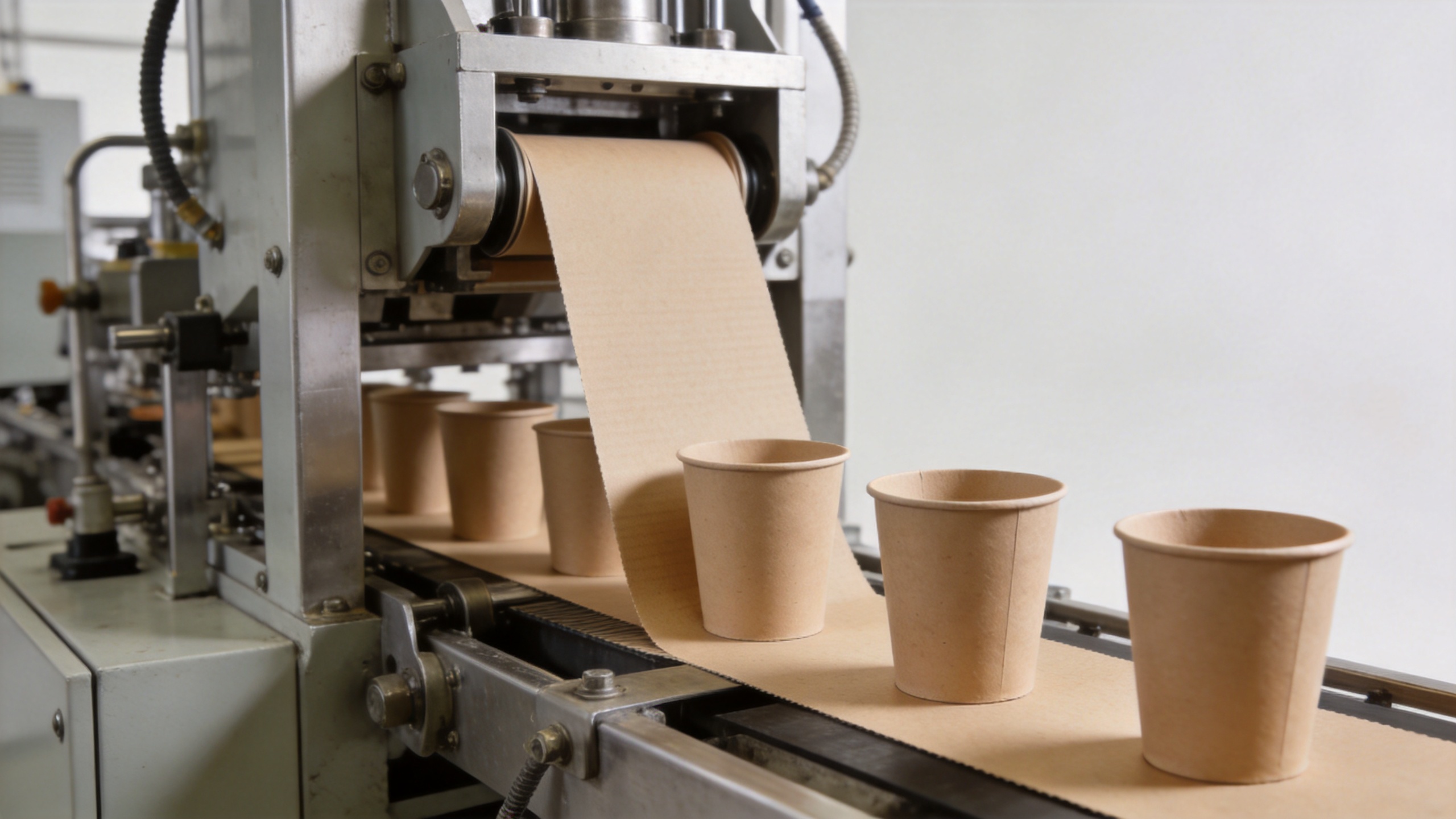
With a paper cup machine, quality checks can be placed around identifiable forming stages rather than left entirely to downstream complaints. Operators can define checks for blanks, side seams, bottoms, rims, shape, appearance, packing, and sample performance under the intended use. The exact test plan should be agreed for the cup, material, market, and customer requirement; a machine alone is not evidence of food-contact compliance or leak-free output.
For mills entering food packaging, this structure can be especially useful. In the United States, manufacturers remain responsible for ensuring food-contact materials meet applicable specifications and limitations. That is a material-and-process responsibility, not a blanket equipment claim. A paper cup machine can support traceable routines, but the team should still confirm paperboard, additives, coatings, inks, intended use, and destination-market requirements.
4. It can make product-format flexibility easier to evaluate
One advantage of a paper cup machine is the ability to compare the operational implications of different cup formats before committing to a market promise. A standard single-wall drink cup, a specialty coffee cup, and a ripple-wall construction may call for different blanks, forming tools, materials, handling, and inspection points. The comparison should begin with the target format, not a generic output figure.
Searchers may use the phrase coffee cup banane wali machine when they are looking for equipment to make coffee cups. For a mill, the phrase points to a real planning question: will the chosen paper cup machine fit the cup diameter, height, paperboard, and wall design that the intended coffee market requires? A line should be assessed against that specification list, including expected changeover frequency.
The same caution applies to a ripple wall paper cup machine. Ripple-wall cups may be attractive where insulation and a distinctive exterior are part of the product concept, but the mill should confirm the construction route, tooling, material compatibility, and quality criteria with its technical team and supplier. Flexibility is valuable only when it can be repeated with controlled settings and documented acceptance criteria.
5. It can improve line coordination and planning
A paper cup machine introduces a downstream production rhythm that can be coordinated with paperboard supply, blank preparation, printing, packing, and dispatch. This can help teams identify where bottlenecks truly occur. For example, a project may discover that the limiting factor is not forming speed but blank availability, inspection capacity, carton supply, or a long changeover between cup formats.
That visibility helps teams make practical decisions about production sequencing, stock levels, preventive maintenance, and spare parts. It also encourages teams to define who owns each handoff. A paper cup machine brings the greatest planning benefit when operating records are reviewed alongside material lots and customer specifications, so recurring issues can be investigated rather than treated as isolated events.
6. It provides a clearer basis for lifecycle-cost decisions
Initial price is only one part of the decision. When evaluating a paper cup machine, a mill should list tooling, utilities, operator training, maintenance access, consumables, spare parts, quality checks, floor layout, packaging, and possible downtime alongside the purchase quote. This does not justify a promised saving or payback period without site data. It does make the comparison more complete.
Not every project needs the most flexible configuration. A mill focused on a stable, high-volume cup may value repeatable settings and straightforward maintenance. A business expecting varied orders may place more emphasis on tooling strategy and changeover discipline. Before comparing speed, it is wiser to write down the changeover requirement. The right paper cup machine is the one that fits the chosen operating model, not simply the largest specification on a brochure.
A practical checklist before selecting a paper cup machine
- Define the cup sizes, wall constructions, and intended beverage or food uses.
- Confirm paperboard, barrier, ink, and food-contact requirements for each target market.
- Map the flow from rolls or sheets to blanks, forming, inspection, packing, and shipment.
- Ask how tools, settings, maintenance points, and spare parts support the required formats.
- Set measurable acceptance criteria for appearance, seams, bottoms, rims, packing, and any agreed functional tests.
- Compare total operating requirements rather than treating quoted machine speed as the whole decision.
Final perspective
A paper cup machine can help a mill build a closer relationship with the finished-packaging market, learn from real forming conditions, organize quality control, and assess multiple cup formats with more discipline. Its value comes from linking equipment choices to paperboard, product design, compliance review, people, and process control. A practical next step is to prepare the target cup drawings, materials, expected order mix, and acceptance criteria, then use that information for a technical discussion with the equipment supplier.
 ONLINE