
 EN

What Forming Technology Drives a Paper Cup Forming Machine?
A paper cup forming machine is not simply a device that bends a paper blank into a cup. It is a timed sequence of feeding, shaping, bonding, bottom joining, knurling, rim curling, and discharge. From a packaging-equipment selection perspective, the useful question is not “Which station is fastest?” but “Which forming method matches the cup design, paper structure, coating, and production rhythm?” That distinction matters because a clean-looking cup can still have a weak seam or an unstable bottom if the forming conditions are mismatched.
For buyers evaluating a paper cup forming machine, the core technology combines mechanical positioning with controlled thermal or ultrasonic bonding. The blank has to arrive in the right orientation, wrap consistently around a forming tool, and receive enough heat and pressure at the overlap and bottom—without overheating a coated surface or distorting the cup body. The same logic also applies when comparing general paper cup shaping equipment with a horizontal paper cup forming machine.
The Forming Principle: Convert a Flat Blank into a Stable Container
The process begins with a die-cut cup-sidewall blank and a separate bottom blank. A feeder separates the sidewall blanks and transfers one blank at a time to the forming section. Guides or mechanical fingers wrap it around a mandrel or tapered forming tool, creating the cup’s conical body. This is the first point where paper stiffness, blank geometry, and transfer accuracy influence the result.
The machine then closes the sidewall overlap. For coated stock, heat can activate the sealable layer while pressure holds the overlap in position. Some configurations use hot air; others may use ultrasonic energy where the material system and equipment design support it. Neither method is automatically right for every application. The practical check is whether the sealing method, dwell time, pressure path, and paper coating behave consistently with the intended cup material.
That is why paper weight alone is not enough for selection. Two blanks with similar basis weight can respond differently if their coating, moisture condition, curl, or die-cut accuracy changes. In routine troubleshooting, a side seam that opens later during curling or knurling is a sign to inspect the full bonding condition—not just the final station.
How the Main Stations Work Together
1. Blank feeding and orientation
A stable paper cup forming machine starts with dependable separation and orientation. Double feeding, skewed blanks, or inconsistent transfer can create faults that look like sealing problems later. Before comparing automation features, confirm the blank dimensions, print registration requirements, paper curl condition, and the expected changeover frequency.
2. Sidewall wrapping and seam bonding
Once the blank wraps around the forming tool, the overlap becomes the side seam. Mechanical forming provides shape; the bonding station provides continuity. A sound seam needs correct overlap placement and compatible energy input. Too little activation or pressure can leave an incomplete bond. Too much heat or unsuitable timing can affect the coated surface or make downstream handling less predictable. It is more useful to validate seam appearance and leak resistance under the planned material than to rely on a generic claim about sealing technology.
3. Bottom insertion and bottom sealing
The bottom blank is introduced into the formed sidewall and joined around the lower edge. Here, alignment is critical: the cup body, bottom disc, and forming tool must meet in a repeatable relationship. The lower edge is folded and bonded to create the liquid-containing joint. In practical terms, operators should observe whether the bottom enters cleanly, whether the fold is even around the circumference, and whether changes in cup diameter require a different setup or tooling adjustment.
4. Bottom knurling
Knurling is a controlled compression pattern around the bottom seam. It is not merely a cosmetic texture. The station helps consolidate the bottom sealing area by applying a patterned mechanical action after the joint is made. When evaluating a paper cup forming machine, inspect the bottom seam around the full circumference rather than checking only one point. Uneven pattern definition, irregular fold lines, or localized gaps should trigger a review of material, heat, pressure, timing, and bottom alignment together.
5. Rim curling and final discharge
The upper rim is curled to create a comfortable edge and add stiffness to the cup opening. This finishing step can reveal earlier variation: a sidewall seam with limited bond strength may separate when the cup is handled or curled. The last stations then transfer, count, or collect finished cups. A good evaluation includes the entire path from feeding to discharge, because a stable forming process should not depend on manual correction at the end.
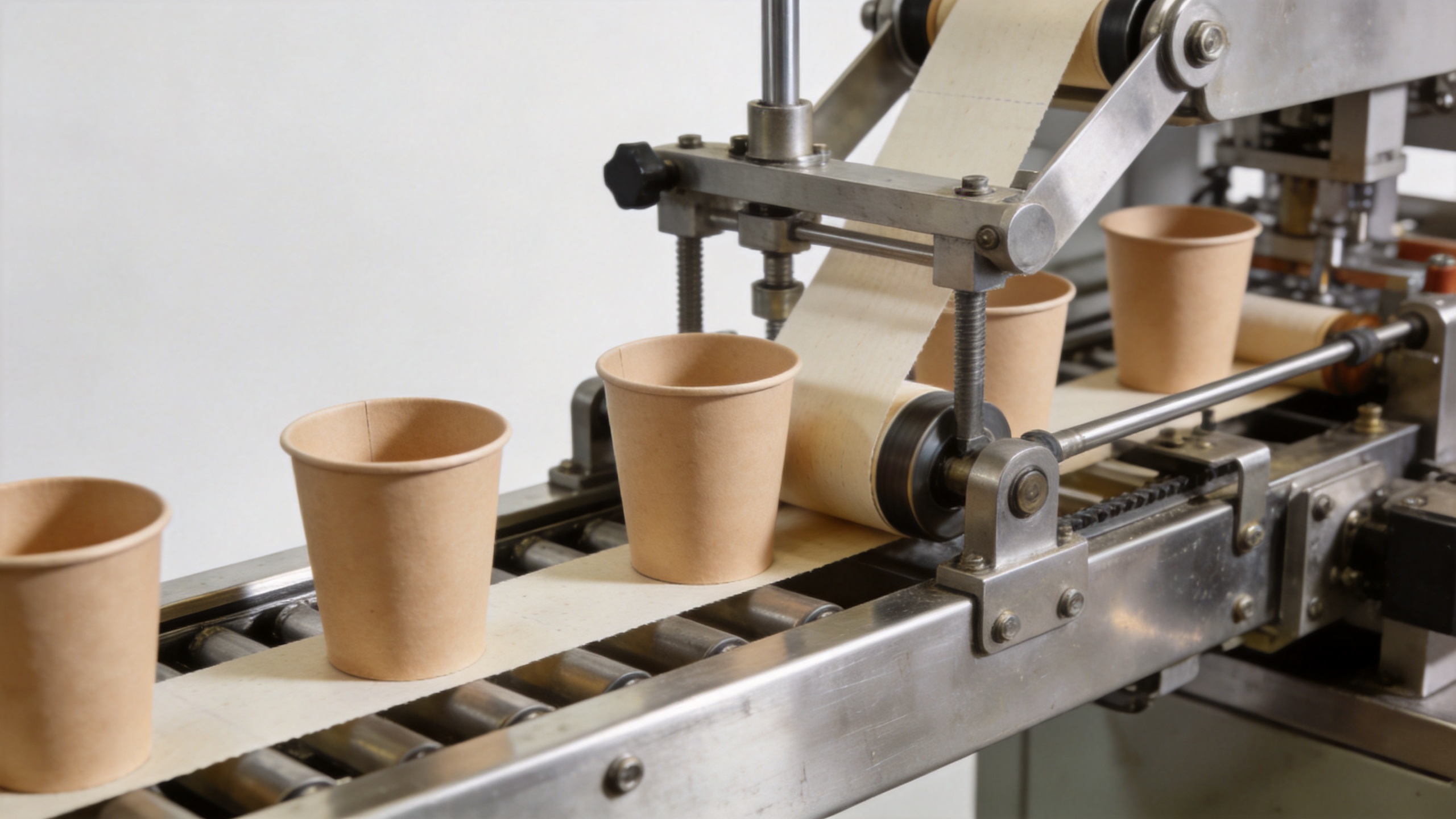
Thermal Bonding, Ultrasonic Bonding, and Mechanical Forming
Mechanical forming is present in every cup-making route because it creates the body shape, folds the bottom edge, and forms the rim. The main technology choice usually concerns how sealing energy is applied to the side seam and bottom. Hot-air-based systems heat the bonding area before pressure closes the joint. They are commonly discussed for heat-sealable coated papers, but settings must be matched to the actual stock and cup geometry. Ultrasonic approaches use localized vibration energy and may be considered for compatible material structures. Their suitability still depends on the cup design, coating, tooling, maintenance capability, and validation samples.
For this reason, selecting a paper cup forming machine should start with application conditions: cup volume, top and bottom diameter, wall taper, paper structure, coating type, printing treatment, and target changeover pattern. The forming technology should follow those conditions—not the other way around.
Where a Horizontal Paper Cup Forming Machine Fits
A horizontal paper cup forming machine describes a layout concept in which the work path and station arrangement are organized horizontally. The layout can influence access, material travel, tooling arrangement, and how an operator observes the sequence. However, “horizontal” should not be treated as a standalone quality guarantee. Ask to see how the specific machine handles blank feeding, side-seam activation, bottom insertion, knurling, and cup discharge for your cup specification.
When comparing layouts, use a verification list rather than a single headline specification:
- Can the feeder handle the approved blank tolerance and paper condition?
- Is the side-seam process matched to the coating and overlap design?
- Can operators observe the bottom seam and rim condition safely during setup?
- How are cup-size changeovers, cleaning points, and routine inspection tasks handled?
- What sample-based acceptance checks will be used before production handover?
How to Judge Paper Cup Shaping Equipment in Practice
The most reliable way to compare paper cup shaping equipment is to turn your requirement into a testable process sheet. Include cup drawings, material samples, coating information, intended use, expected operating schedule, and the cup sizes that will actually be changed on the line. Then define the sample checks before discussing a final configuration: side-seam appearance, bottom-seam uniformity, rim shape, cup dimensions, and leakage testing appropriate to the product use.
For a food-packaging project, it is also sensible to confirm material-contact requirements, documentation needs, and the boundaries of installation or training support. A high headline speed does not by itself show whether the process is suited to frequent format changes or to a paper grade that behaves differently from a supplier’s demonstration stock.
Questions to Ask Before You Specify the Machine
- Which cup diameters, heights, and wall tapers must the machine form?
- What exact paperboard and coating structure will be supplied for production trials?
- Which seam and leak checks define acceptable cups for the intended application?
- How often will tooling or format changes occur, and who will perform them?
- Which stations need routine cleaning, inspection, or wear-part replacement?
These questions bring the discussion back to the forming path. A paper cup machine should be selected as a coordinated system of material handling, shape control, bonding, compression, and verification—not as an isolated speed figure.
Conclusion
The technology that drives a paper cup forming machine is the coordination of mechanical forming with controlled seam and bottom bonding. Feeding and wrapping establish shape; thermal or ultrasonic activation and pressure close the joints; bottom knurling consolidates the lower seam; and rim curling completes the usable cup edge. Whether you are considering conventional paper cup shaping equipment or a horizontal paper cup forming machine, start with the cup design and material, then confirm the process with representative samples and clearly defined acceptance checks.
 ONLINE