
 EN

Why Paper Cup Forming Machine Is a Market Favorite?
A paper cup forming machine has become a preferred investment for converters and food-packaging businesses because it turns a multi-stage process into a repeatable production routine. The appeal is not simply that a paper cup forming machine can run automatically. Buyers value the ability to control cup-body forming, side sealing, bottom attachment, knurling, rim curling, and collection in one coordinated workflow. When demand calls for dependable disposable beverage packaging, that coordination matters.
From a packaging-equipment selection perspective, a paper cup forming machine should be evaluated against the target cup shape, paper construction, and required production rhythm before anyone compares a headline speed. A machine that looks attractive on a specification sheet may still be a poor fit if the material, tooling, changeover routine, or inspection method has not been clarified.
Automation makes the forming process easier to manage
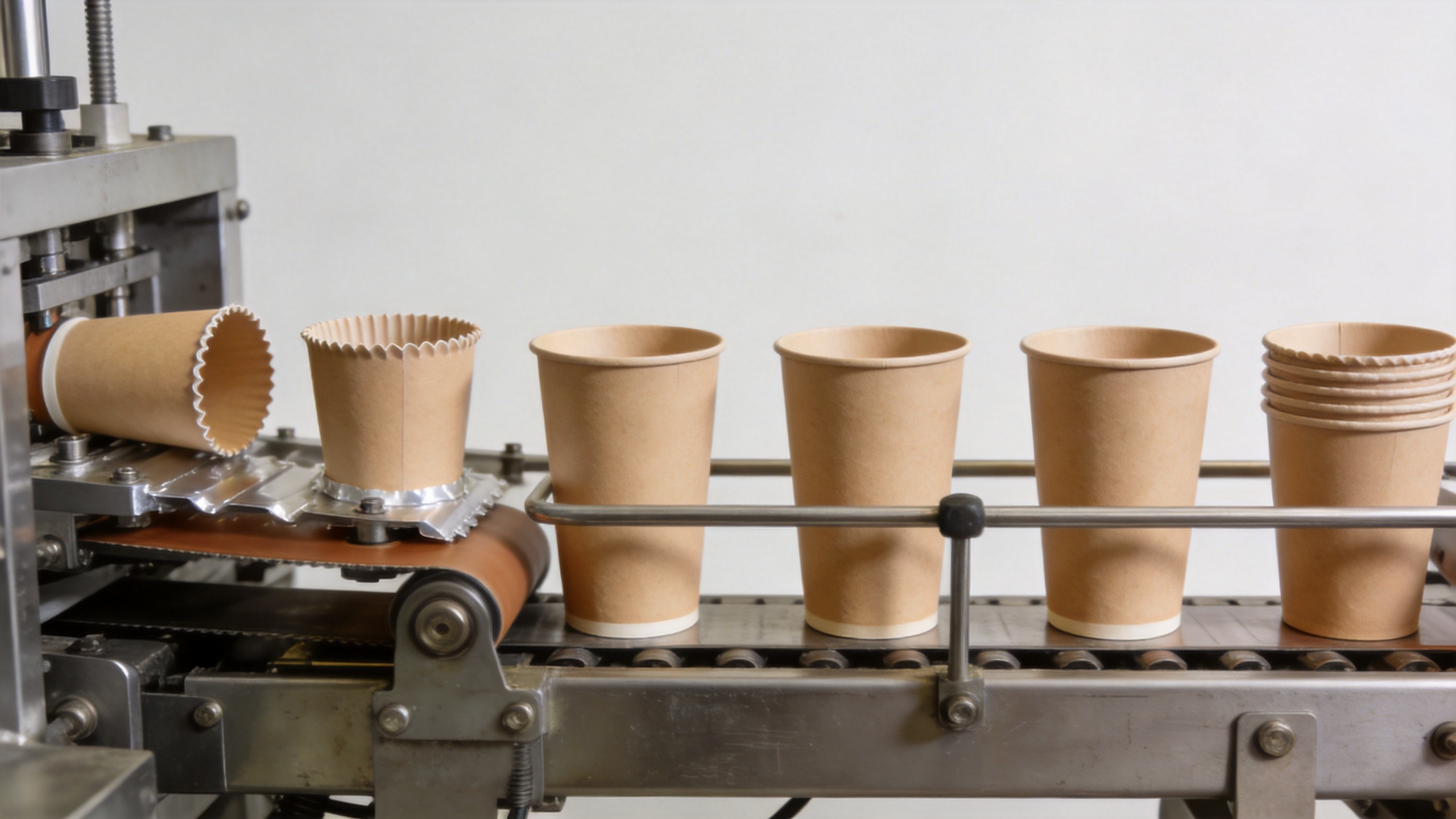
A conventional paper-cup workflow involves several linked actions: feeding prepared blanks, shaping the cup wall, sealing the side seam, attaching and sealing the bottom, knurling, curling the rim, and collecting finished cups. A paper cup forming machine brings these actions into a defined sequence. That gives production teams a clearer basis for setting up work, checking quality, and locating the source of a recurring issue.
For this reason, the market often favors a fully automatic paper cup forming machine when the application has a stable product mix and a need for repeatable handling. Automatic operation does not remove the need for capable operators or material checks. It does, however, reduce the number of handoffs that can introduce inconsistent timing or handling. A automated cup-forming equipment is most useful when its automation matches a documented production routine rather than an assumed one.
Consistency is a stronger buying reason than speed alone
Fast output attracts attention, but finished-cup consistency usually has greater operational value. A well-matched automated cup-forming equipment can help teams standardize how blanks move through forming and how critical sealing and curling stages are repeated. The key word is “help”: finished quality still depends on the cup design, paper or coated-paper condition, tooling, settings, maintenance, and operator verification.
Consider the paper cup body forming device as one part of the wider system, not a stand-alone promise of quality. Its job is to create and guide the cup body accurately enough for later sealing and bottom-forming stages to work under controlled conditions. If cup-body geometry varies, downstream adjustments may become harder. That is why a automated cup-forming equipment is often preferred by buyers who want a process they can inspect stage by stage.
Before approving a configuration, ask how the supplier recommends checking seam appearance, bottom integrity, rim shape, and finished-cup handling for the intended material and cup type. These are more useful questions than accepting a generic claim that every automated cup-forming equipment delivers identical results in every application.
It supports a practical path from demand to configuration
Paper-cup purchasing decisions commonly involve production, quality, and procurement roles. Each sees a automated cup-forming equipment differently. Production may focus on changeovers and daily checks. Quality personnel may focus on sealing conditions and material traceability. Procurement may need to compare support scope, spare-part planning, acceptance criteria, and total operating implications.
A useful selection process starts with the application, then moves to conditions, then to configuration:
- Define the cup. Record capacity, shape, rim style, bottom design, and the intended beverage or food-packaging use.
- Confirm the material. Discuss the paper grade, coating construction, blank dimensions, and any food-contact documentation relevant to the destination market.
- Map the production rhythm. Identify expected product mix, shift pattern, changeover frequency, inspection points, and downstream packing requirements.
- Review the paper cup forming machine configuration. Ask how the forming, heating or sealing, bottom, knurling, curling, and collection stages relate to the stated conditions.
- Write acceptance conditions. Agree on samples, trial material, test method, training, service boundaries, and the records needed at handover.
This sequence explains why the automated cup-forming equipment is a market favorite: it gives buyers a framework for moving from a packaging need to a checkable process. A fully automatic paper cup forming machine may make sense for one project, while another project benefits more from a configuration designed around frequent specification changes. The right answer comes from the operating conditions.
Market preference also reflects labor and workflow considerations
Businesses do not choose a automated cup-forming equipment only to reduce manual activity. They choose it to organize work around consistent machine states, repeatable checks, and predictable material flow. When the cup type and paper condition are confirmed, a automated cup-forming equipment can make training discussions more concrete: operators can learn the sequence, quality checkpoints, cleaning routine, changeover steps, and escalation path for abnormalities.
Still, automation should not be treated as a shortcut around planning. A automated cup-forming equipment must be supported by a preventive-maintenance plan, appropriate spare parts, clean material handling, and a clear response when cup appearance or seal behavior changes. In other words, the buyer should move from comparing a single machine parameter to assessing the production system around it.
What to compare before choosing a paper cup forming machine
| Comparison area | What to clarify | Why it matters |
|---|---|---|
| Cup and material fit | Target cup size, geometry, blank, paper grade, and coating construction | These conditions influence the suitable paper cup forming machine setup. |
| Forming sequence | How the cup body, side seam, bottom, knurling, and rim are handled | It helps buyers assess whether the workflow supports their inspection plan. |
| Changeover approach | Tooling, adjustments, training, and planned specification changes | Frequent changes can affect the most suitable configuration choice. |
| Acceptance and support | Trial conditions, documentation, spare parts, and service scope | It turns a paper cup forming machine purchase into a verifiable project. |
Why the preference is likely to continue
Demand for convenient single-use food and beverage packaging keeps attention on equipment that can make cup production more organized and repeatable. A automated cup-forming equipment remains attractive because it combines multiple essential forming stages in a workflow that buyers can define, test, and improve. The paper cup body forming device is important, but the overall value comes from how all stages work together with the selected material and operating discipline.
For a buyer, the next step is not to ask which automated cup-forming equipment is universally superior. Instead, prepare the cup drawing, material information, target product mix, expected changeovers, and acceptance criteria. With that information, a supplier can discuss whether a fully automatic paper cup forming machine and its configuration fit the project. That practical, checkable path is exactly why automated cup-forming equipment continues to be a market favorite.
 ONLINE