
 EN

What Makes Machine For Paper Cup Production Unique?
A machine for paper cup production is not simply a device that turns a paper blank into a cup. It is a coordinated forming system in which paper stock, cup geometry, heat or sealing settings, tooling, motion timing, and inspection practices influence one another. From a packaging-equipment technical-selection perspective, the useful question is not “Which unit has the highest stated speed?” but “Which machine for paper cup production fits the cup, material, and production rhythm we need to verify?”
That distinction matters when comparing equipment for paper cup manufacturing. Two projects may both require disposable beverage cups yet need different configuration discussions because their diameters, heights, coating types, print requirements, changeover frequency, and acceptance criteria are different. The forming system becomes distinctive when its stations can be matched to those real conditions rather than to a broad product label.
Why the process is more than a speed figure
A typical machine for paper cup production coordinates several forming stages: feeding a prepared blank, shaping and sealing the sidewall, placing and joining the bottom, knurling the bottom seam, curling the rim, and moving cups toward inspection and packing. The exact sequence and mechanism depend on the design, but the logic stays the same: each station must hand off a correctly positioned part to the next one.
That is why a stated output rate alone is not enough to compare a forming line. A production target should be discussed with the intended cup size, blank quality, paperboard or coated-paper specification, operating plan, and expected changeovers. If those inputs are not stable, a headline rate does not explain the actual working rhythm. More accurately, the relevant question is whether the forming, sealing, and discharge sequence remains appropriate under the conditions that will be used.
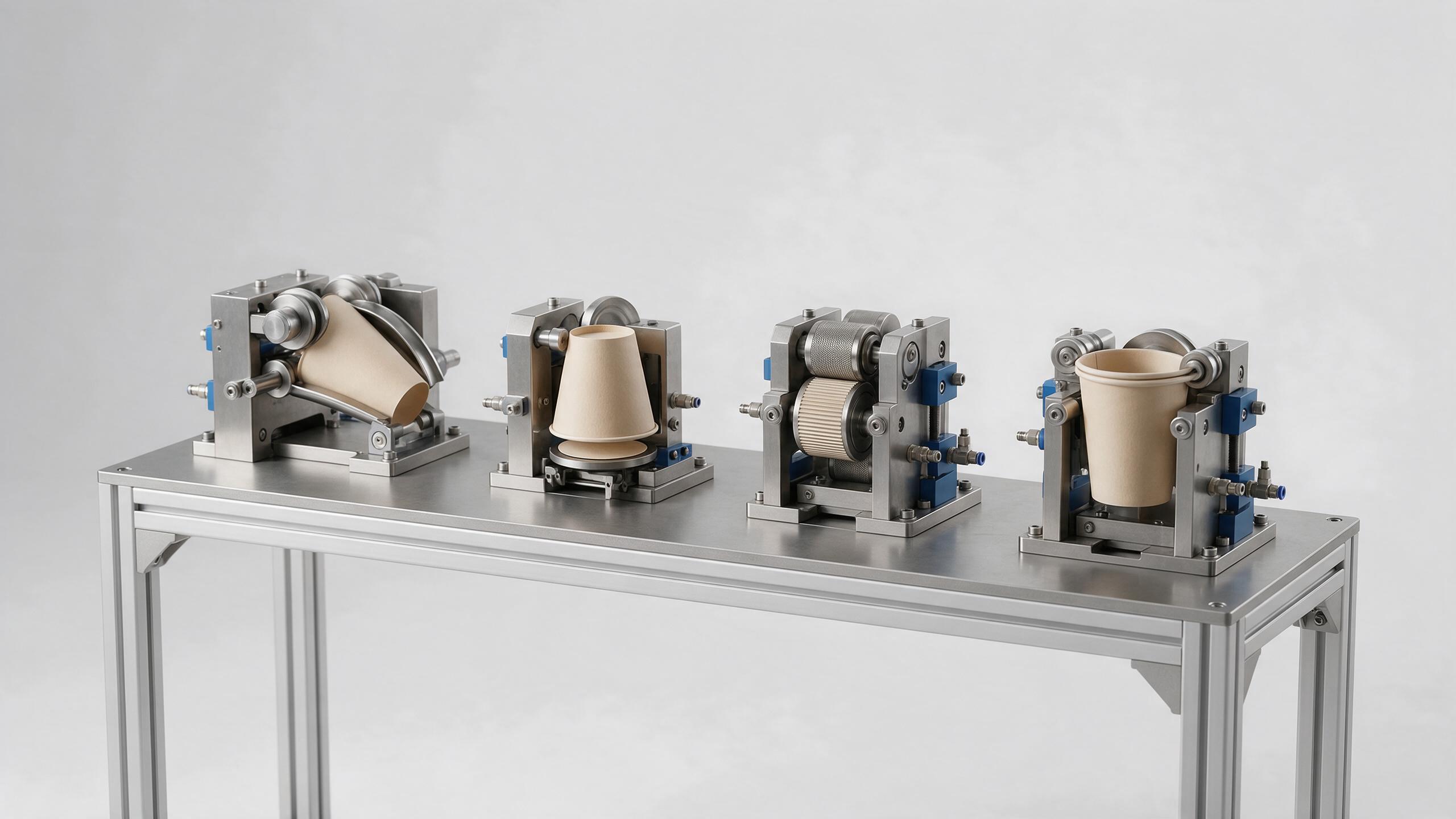
The unique value lies in coordinated forming
1. Cup geometry drives the tooling conversation
Diameter, height, taper, bottom shape, and rim requirements affect the way this production equipment should be reviewed. A cup’s nominal volume is useful, but it does not replace a drawing or physical sample. Buyers should provide the cup dimensions and any tolerance expectations before comparing molds, bottom-forming parts, or rim-curl arrangements. This is especially important for a use and throw cup making machine intended to run more than one format.
2. Paper stock and coatings affect seam conditions
Paper and coating choices influence how the equipment should be assessed. Sidewall joining and bottom knurling need to be considered alongside the material’s behavior, not as isolated features. A common purchasing mistake is to treat a machine setting as a universal answer to a material issue. In practice, an unexpected seam result may require the team to check blank dimensions, material consistency, tooling condition, temperature-related settings, and operating procedure together.
For cups intended for food contact, the machinery discussion should also be separated from material-compliance verification. Applicable rules depend on the destination market, the food type, the coating, inks, adhesives, and conditions of use. For example, U.S. requirements for paper and paperboard components are addressed in 21 CFR Part 176, but a buyer should still request the relevant documentation for the selected materials and intended application. A machine for paper cup production does not by itself establish that a finished cup meets a market-specific requirement.
3. Production rhythm includes changeovers and inspection
The practical value of the line also comes from how its workflow supports the planned schedule. Is the line dedicated to one format, or will operators change sizes often? How will rejected cups be identified? What checks will be used for side seams, bottom attachment, rim shape, and visual appearance? These questions turn a general equipment comparison into a workable production plan.
For equipment for paper cup manufacturing, it helps to map the full rhythm: blank supply, forming, inspection, packing, operator access, cleaning, and planned maintenance. A fast forming section can still create a bottleneck if downstream handling, quality checks, or changeover procedures have not been defined. Before accepting an output claim, agree on the sample, materials, shift pattern, and measurements to be used during verification.
What buyers should compare before selecting a machine
A machine for paper cup production is easier to evaluate when the inquiry starts with conditions rather than feature lists. Use the following checklist to make supplier discussions more specific:
- Product scope: cup drawings, sample cups, capacity, rim style, bottom shape, and whether multiple formats are planned.
- Material scope: paper grade, coating or barrier type, blank construction, printing status, and known variation between batches.
- Process scope: sidewall sealing method, bottom joining, knurling, rim curling, inspection points, and packing handoff.
- Operating scope: target production rhythm, operator routine, training needs, cleaning access, maintenance planning, and spare-part preparation.
- Acceptance scope: sample conditions, defect definitions, test method, documentation, and what will be checked before shipment or commissioning.
This approach also clarifies what a use and throw cup making machine must accomplish in the intended application. The term may describe the cup’s end use, but it does not define the required tooling, material behavior, or production verification steps. Those details should be confirmed with the supplier and the project team.
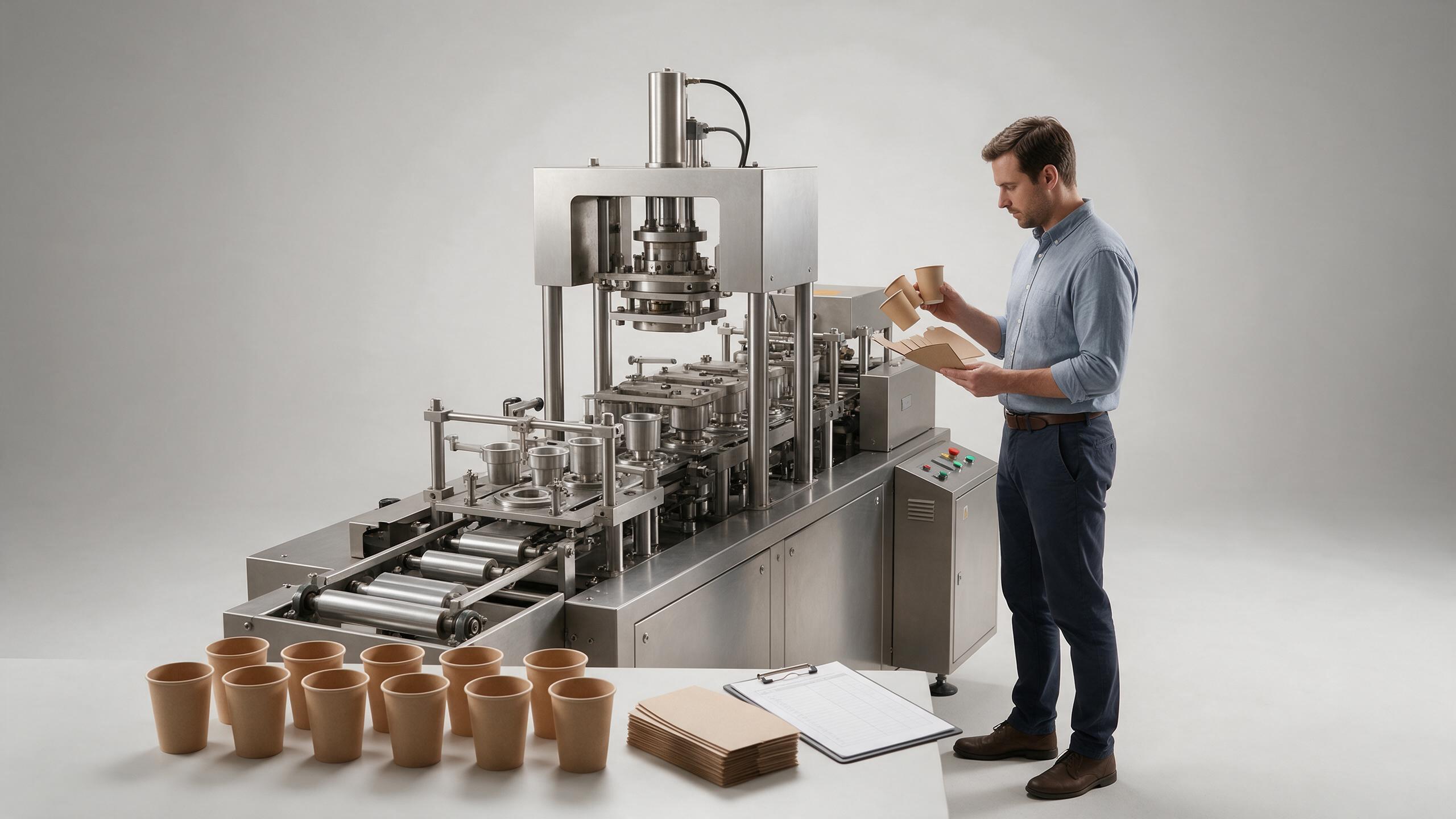
How to make the comparison more useful
When reviewing a machine for paper cup production, ask for a configuration discussion that follows the cup from blank to packed product. Start with the target format and material, then review the forming sequence, then define the inspection and acceptance conditions. This order is more useful than comparing a long list of components without knowing the duty they must perform.
It is also sensible to distinguish general capability from project confirmation. A supplier may discuss automatic paper-cup machine directions or servo-forming options, but the actual fit still depends on the sample, paper stock, planned production rhythm, and support scope. If those conditions are already clear, the evaluation of a machine for paper cup production becomes more meaningful. If they are not clear, the next step is to collect them rather than assume a configuration will suit every cup.
Conclusion: uniqueness comes from fit, not a label
What makes a machine for paper cup production unique is its ability to bring forming steps, material behavior, cup design, and operating needs into one repeatable workflow. The right evaluation does not rely on a single capacity number or a generic claim. It defines the cup, verifies the material and process conditions, plans changeovers and inspection, and records the acceptance criteria. That framework gives buyers a clearer basis for comparing equipment for paper cup manufacturing and preparing a focused technical inquiry.
 ONLINE