
 EN

Where Paper Cup Machine Manufacturer Leads the Industry?
Buyers often ask which paper cup machine manufacturer leads the industry. The useful answer is not a universal name or a headline claim. A manufacturer leads for a particular project when it can show that its machine, process support, documentation, and service plan fit the cups you need to make. That standard is more demanding than comparing a catalog speed or the first quotation.
For a procurement team, the question should become: which paper cup machine manufacturer can meet our defined cup range, material conditions, production rhythm, safety expectations, and acceptance checks? Starting there makes supplier discussions more comparable and helps separate verified evidence from general sales language.
Leadership starts with the production brief
Before comparing suppliers, write a short production brief. Include cup sizes and profiles, single-wall or other constructions, intended beverage use, paper stock and coating details, target output, shift pattern, utilities, available floor space, and planned market. A paper cup machine manufacturer can respond more precisely when these inputs are clear.
This matters because a listed machine speed does not by itself describe a finished production result. Tooling, blank quality, material behavior, changeover frequency, operator practice, and downstream handling all affect the line. In other words, compare the whole operating condition, not one number. If your team expects several cup formats, request a changeover discussion early rather than treating it as an afterthought.
An automatic paper cup machine manufacturer should be able to explain how the proposed configuration relates to your cup geometry and workflow. Ask which items are standard, which are application-dependent, and what information must be confirmed before final configuration. A careful answer is often more useful than a broad claim of suitability.
Compare manufacturers across five evidence areas
1. Forming process and material compatibility
A credible paper cup machine manufacturer should discuss the steps that matter for your application: blank feeding, side-seam formation, bottom insertion, heating or sealing approach, knurling, rim finishing, discharge, and quality observation. The discussion should connect the process to the paper and coating you plan to use, not merely repeat general machine terminology.
Ask suppliers to identify the material samples and cup drawings they need for a meaningful evaluation. For food-service cups, also distinguish machine capability from food-contact compliance. In the United States, paper and paperboard components used with aqueous and fatty foods fall within the scope of 21 CFR Part 176; the applicable material documentation must be verified for the target use and market. A machine is not made compliant by a marketing phrase about the finished cup.
2. Automation that supports the actual operation
Automation should solve a defined operating need. When evaluating an automatic paper cup machine manufacturer, ask how feeding, sensing, alarms, access for cleaning, fault indication, and changeover procedures work in practice. A feature is meaningful when the supplier explains its operating boundary and the operator action it requires.
For example, a high-output project may prioritize consistent blank handling and a clear response to production interruptions. A project with frequent format changes may prioritize setup guidance, adjustment points, and tooling management. Neither priority automatically makes one supplier superior; the better choice depends on the production brief.
3. Acceptance criteria before shipment
Leadership is easier to evaluate when the supplier accepts measurable pre-shipment criteria. Put the proposed cup type, material condition, inspection method, run duration, defect definitions, documentation, and witness arrangement into the commercial discussion. This converts a vague performance conversation into a factory-acceptance plan.
A commercial paper cup machine manufacturer should help clarify what will be checked during acceptance and what needs to be supplied by the buyer. Include the boundary between machine testing and the buyer’s final process validation. This is especially important when output will be paired with printing, packing, inspection, or other downstream steps.
4. Safety and documentation
Documentation is not an administrative extra. Request the operating manual, electrical information, safety instructions, maintenance schedule, recommended spare-parts list, and a list of documents available for the intended destination. For machinery placed on the EU market, applicable requirements can include CE marking, an EU declaration of conformity, safety information, and instructions. Confirm current obligations with the responsible manufacturer, importer, and local adviser rather than assuming one document fits every market.
A responsive paper cup machine manufacturer will identify which documents are available, which depend on final configuration, and which require buyer input. This transparency is more valuable than an unqualified statement about certification.
5. Service readiness and lifecycle cost
The lowest initial quote may not represent the lowest operating burden. Compare spare-parts identification, remote troubleshooting process, training scope, response channels, maintenance tasks, and the availability of technical drawings or wear-part guidance. From a buyer’s perspective, a supplier that explains these limits plainly is easier to evaluate.
Ask each paper cup machine manufacturer to map support around your commissioning plan: who installs, what site conditions must be ready, what operators need to learn, and how issues are recorded after handover. A usable support process can matter as much as the machine configuration when a production line is new.
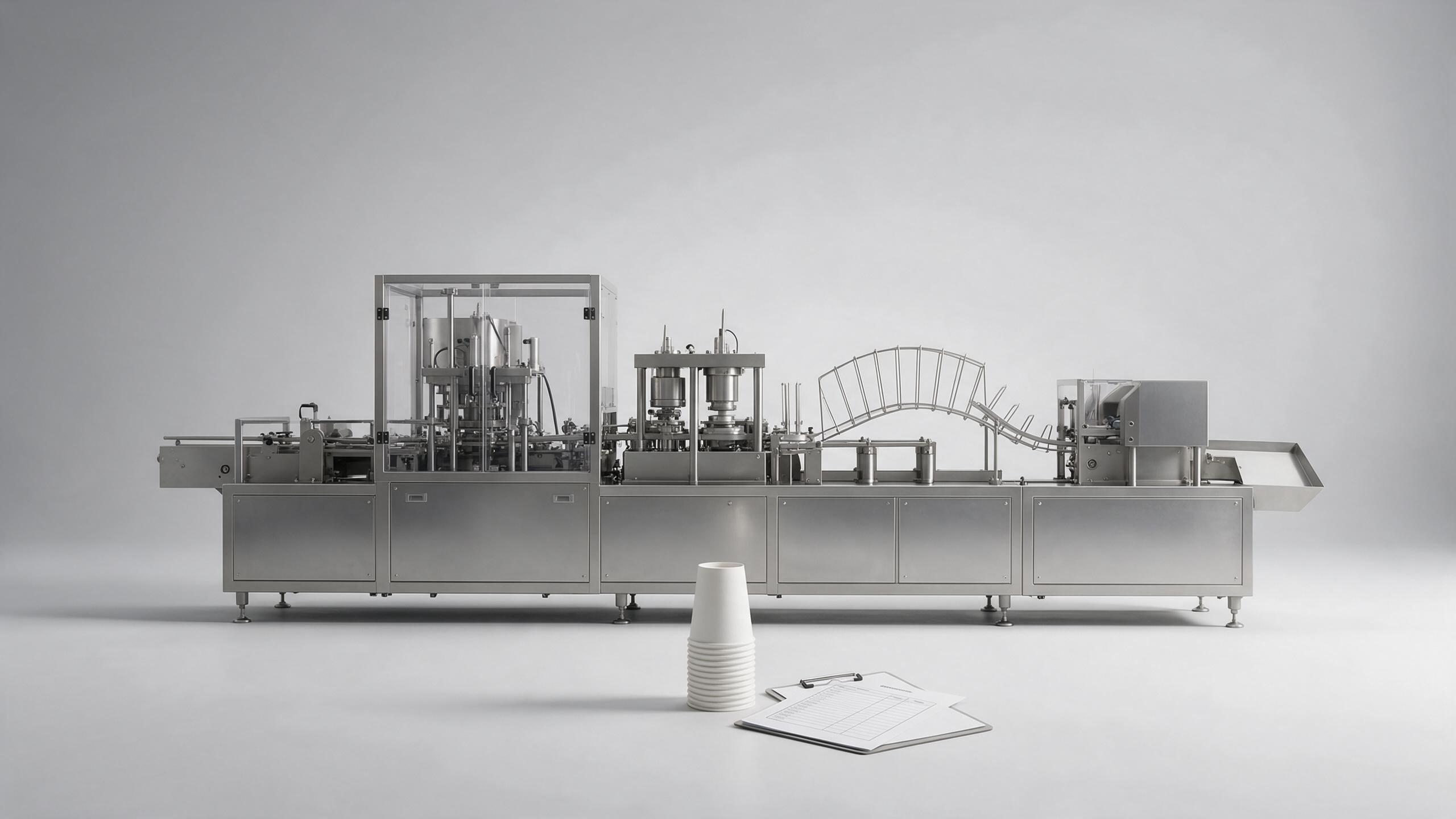
How to score an automatic paper cup machine manufacturer
Create one comparison sheet for every candidate. Score each one against the same production brief, but keep notes beside the score so the team can see the evidence behind it. Useful headings include:
- Fit of the proposed configuration to cup sizes, materials, and output target
- Clarity of process explanation and sample-testing requirements
- Factory-acceptance scope and measurable inspection criteria
- Safety, operating, maintenance, and destination-market documentation
- Training, commissioning, spare parts, and troubleshooting process
- Quotation transparency, including exclusions, optional tooling, and delivery assumptions
This approach avoids comparing a highly specified offer with a broad catalog offer as if they were equivalent. It also gives procurement, production, and quality personnel a common language for their review. If evidence is incomplete, mark it as pending rather than filling the gap with assumptions.
So, where does a manufacturer lead?
The leading paper cup machine manufacturer for your business is the one whose proposal remains credible after a detailed technical and commercial review. It can connect cup requirements to configuration choices, define what will be demonstrated, provide relevant documentation, and support the line after delivery. That conclusion may differ between a high-volume beverage producer, a converter with frequent format changes, and a new commercial operation.
Start with a production brief, send the same questions to each supplier, and require written answers where the project depends on them. The result is not a generic industry ranking; it is a decision that your team can audit, negotiate, and use for a more confident equipment purchase.
 ONLINE