
 EN
EN

What Makes Paper Converting Machine Versatile?
A paper converting machine is versatile when it can turn a parent roll or sheet into different saleable formats while remaining practical to set up, run, clean, and maintain. That definition matters because versatility is often mistaken for a long feature list. In reality, a machine earns that label only when its web handling, tooling, controls, and downstream interfaces match the work a converter actually plans to do.
From a packaging-equipment selection perspective, start with the application rather than the claimed speed. A business producing one stable format has different priorities from one that alternates widths, substrates, print requirements, or pack styles. Paper converting equipment can process paper or paperboard into specified rolls, sheets, or finished products, but no single configuration is automatically right for every material and process.
Versatility starts with the converting path
Paper arrives in several forms: jumbo rolls, pre-cut sheets, coated stock, plain paper, or paperboard. A paper converting machine becomes useful across more jobs when its process path can accommodate the required sequence without making each change impractical. Depending on the application, that path may involve unwinding, web guiding, slitting, sheeting, printing, folding, laminating, embossing, forming, or rewinding.
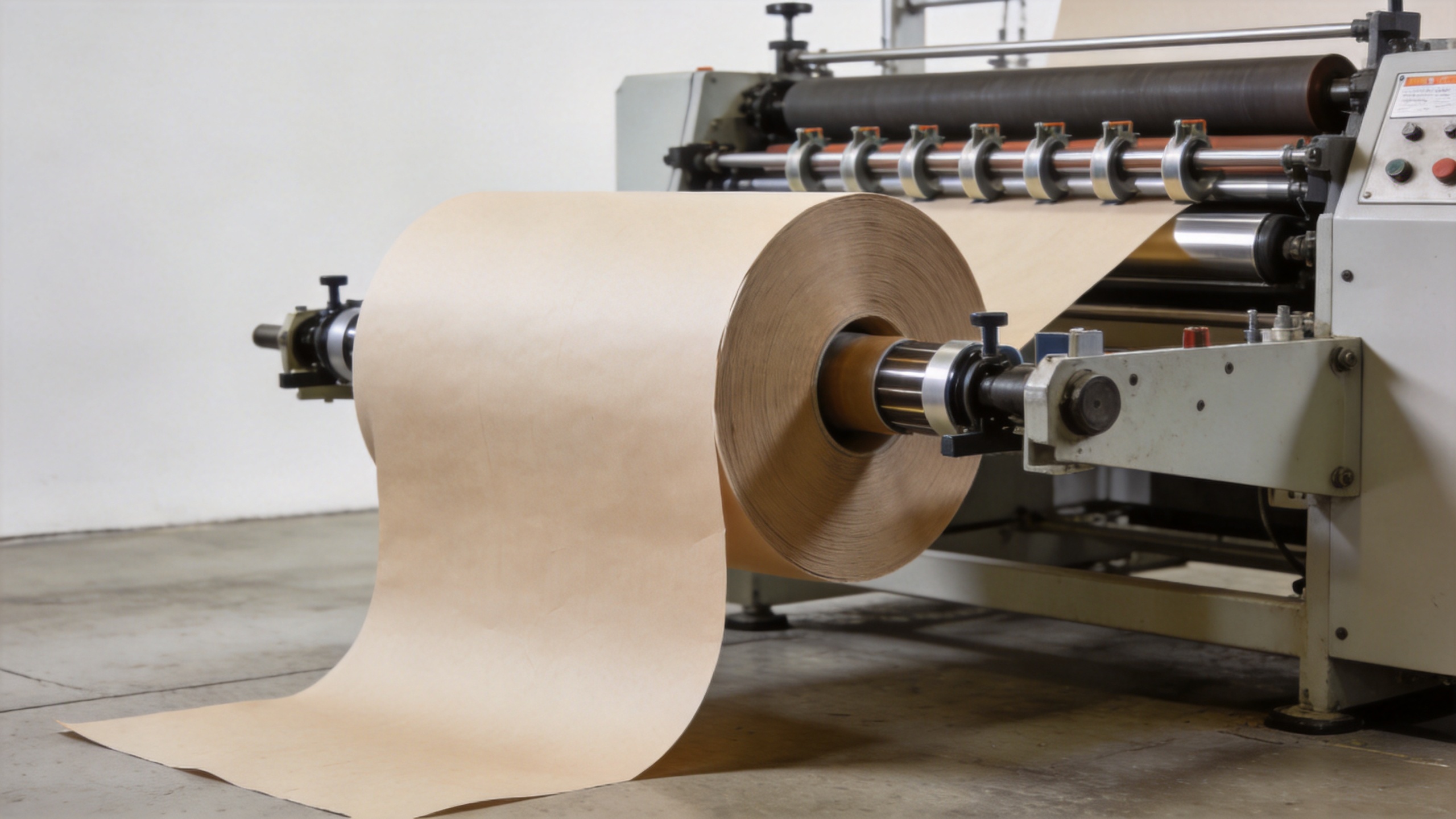
A slitter rewinder illustrates the point. It typically unwinds a master roll, separates it into narrower widths, and rewinds the finished strips. Its flexibility is not merely the ability to cut; it depends on whether operators can set usable widths, manage tension, handle the intended substrate, and change the finished roll specification reliably. In other words, the operation and the changeover path must both fit the production plan.
Five capabilities that make a paper converting machine adaptable
1. Stable web handling across material conditions
Paper, paperboard, coated grades, and laminated structures do not behave in exactly the same way. Their stiffness, surface condition, curl, thickness, and moisture response can affect feeding and tension. A versatile paper converting machine gives the production team controllable handling points—such as unwind control, web guidance, tension management, and compatible contact surfaces—so that material changes can be evaluated instead of guessed.
This is why a fixed configuration is not necessarily the most adaptable choice. Before comparing options, confirm the paper grades, roll dimensions, grain direction where relevant, coatings, and acceptable finished-product tolerances. If the material set has not been defined, the right answer may need further technical confirmation.
2. Tooling and format flexibility
Versatility often comes from the parts that touch or shape the material: knives, dies, scoring tools, folding sections, forming tools, or rewind cores. A machine may support several formats, yet the real question is how much work is required to move between them. A frequent oversight is failing to confirm changeover frequency. For a long production run, a more involved setup may be acceptable; for short runs, the setup sequence can become a major planning factor.
Ask for a format matrix rather than a broad statement that the machine is “multi-purpose.” The matrix should identify each target size, the required tooling, adjustment points, anticipated verification steps, and any constraints imposed by the substrate. That makes the scope of a paper converting machine tangible.
3. Modular process sections
Many converting lines gain flexibility by pairing core web handling with process modules. A basic route might include unwind, cut, and rewind sections. A more specialized route could add printing, coating, folding, sealing, inspection, or collection. The value of modularity is that the line can be planned around the actual conversion sequence instead of forcing every job through unnecessary stations.
However, more modules do not automatically create a better paper converting machine. Each added section can introduce setup work, coordination needs, and maintenance points. The better question is whether a module supports a recurring product requirement and whether it can be integrated into the line’s operating rhythm.
4. Controls that help repeat a proven setup
Controls contribute to versatility when they make a confirmed setting easier to repeat. Clear operating screens, understandable alarms, and organized setup records can help operators return to a known configuration after a changeover. Automation does not mean maintenance disappears; it means the team should still understand inspection points, material loading, cleaning access, and basic fault escalation.
During evaluation, look at the operator path: How is a recipe selected? Which adjustments remain manual? How are alarms explained? Can the team verify the first acceptable output before full production begins? These questions are more useful than treating automation as a blanket promise.
5. Compatibility with the rest of the production flow
A paper converting machine works inside a system. Its versatility depends on upstream roll supply or sheet feeding and on downstream packing, inspection, stacking, or logistics. A fast section can still cause delays if operators wait for material, struggle with product collection, or repeatedly adjust interfaces between stations.
For this reason, evaluate the entire line rhythm, not only the headline capacity of one module. Consider roll handling, reject management, finished-product flow, access for cleaning, and the space needed for safe changeovers. A configuration that balances these steps may be more versatile in day-to-day use than one optimized for a single nominal condition.
Paper converting equipment versus a one-job machine
The phrase paper converting equipment covers a broad family of machines. Some are intentionally dedicated: they perform one repeatable operation efficiently for a narrow product range. Others are designed with adjustable guides, replaceable tooling, configurable process sections, or controls that support several related jobs. Neither approach is universally better.
Choose a dedicated arrangement when volume, product design, and material are stable. Choose a more adaptable arrangement when your product mix changes often enough to justify the extra configuration capability. The trade-off is straightforward: speed and simplicity for a fixed task can conflict with frequent format changes. Make the priority explicit before asking a supplier for recommendations.
A practical checklist for judging versatility
- Products: List current and planned finished formats, widths, lengths, folds, and pack requirements.
- Materials: Identify paper grades, coatings, thickness ranges, and roll or sheet supply conditions that require confirmation.
- Changeovers: State how often formats change and which changes must be completed within the same shift.
- Process route: Map each required step, from unwinding or feeding through conversion and final collection.
- Operators: Clarify training level, cleaning responsibilities, recipe use, and alarm-response expectations.
- Validation: Define sample criteria and acceptance checks before treating a claimed configuration as suitable.
- Support: Ask about wear parts, documentation, remote support boundaries, and the information needed to diagnose a problem.
What to ask a paper converting machinery manufacturer
A conversation with a paper converting machinery manufacturer is most productive when it begins with inputs and output requirements rather than a request for the “most versatile” model. Share samples or specifications where possible, then ask which tooling, web-handling controls, and process modules are relevant to those conditions.
Useful questions include: Which material assumptions are built into the recommendation? Which format changes need replacement tools? What should be verified during a trial? Which settings can be documented for repeat production? What routine maintenance points affect the intended work? The answers should distinguish confirmed capability from items that still require testing.
Conclusion: versatility is a fit, not a slogan
A paper converting machine is versatile when it gives a converter a repeatable way to handle the materials, formats, and process steps that genuinely belong in its production plan. Material adaptability, tooling choices, modular sections, repeatable controls, and line integration all contribute. Start by writing down the intended jobs, then compare configurations against those conditions. That approach makes the discussion with a paper converting machinery manufacturer clearer and helps prevent a general-purpose claim from becoming an expensive mismatch.
 ONLINE