
 EN
EN

Why Paper Production Machine Enhances Mill Speed?
Mill speed is often discussed as a number on a specification sheet. In practice, a paper production machine enhances speed when it keeps fiber flow, drainage, web handling, and operator decisions aligned. A faster drive alone cannot correct unstable stock, poor water removal, or frequent breaks. From a maintenance-planning viewpoint, the useful question is not “How fast can a paper production machine run?” but “How steadily can it make acceptable paper through an entire shift?”
Speed is a system result, not a single machine setting
A paper production machine works as a linked process. Stock preparation, approach flow, forming, pressing, drying, winding, and controls all affect the next stage. When one stage becomes inconsistent, the line may need to slow down even if the rest of the line has available capacity. This is why sustainable speed depends on stable conditions rather than a short peak-speed test.
For a mill team, the first task is to identify where speed is actually being lost. Is the web breaking after the forming section? Is moisture variation creating dryer limitations? Are reel changes or cleaning stops interrupting production? A paper production machine improves mill speed when its equipment choices and maintenance routine address the constraint that limits the full line.
Clean stock gives the paper production machine a stable start
Stock quality affects runnability before the sheet reaches the wire. A paper production machine receiving pulp with troublesome contaminants may face deposits, uneven drainage, wear, or downstream sheet defects. A paper cleaning machine is therefore not just an upstream accessory. It helps remove unwanted material from the furnish so later stages can operate with fewer avoidable disturbances.
Fine contaminants can include sand fines, micro-stickies, and filler particles. Their removal is a process decision that must match furnish type, consistency, and the mill’s quality target. When a paper cleaning machine is correctly integrated, the forming line has a more consistent feed. That can reduce the operational reasons for backing off speed, though it does not guarantee a universal output increase.
Drainage and web transfer define the usable speed window
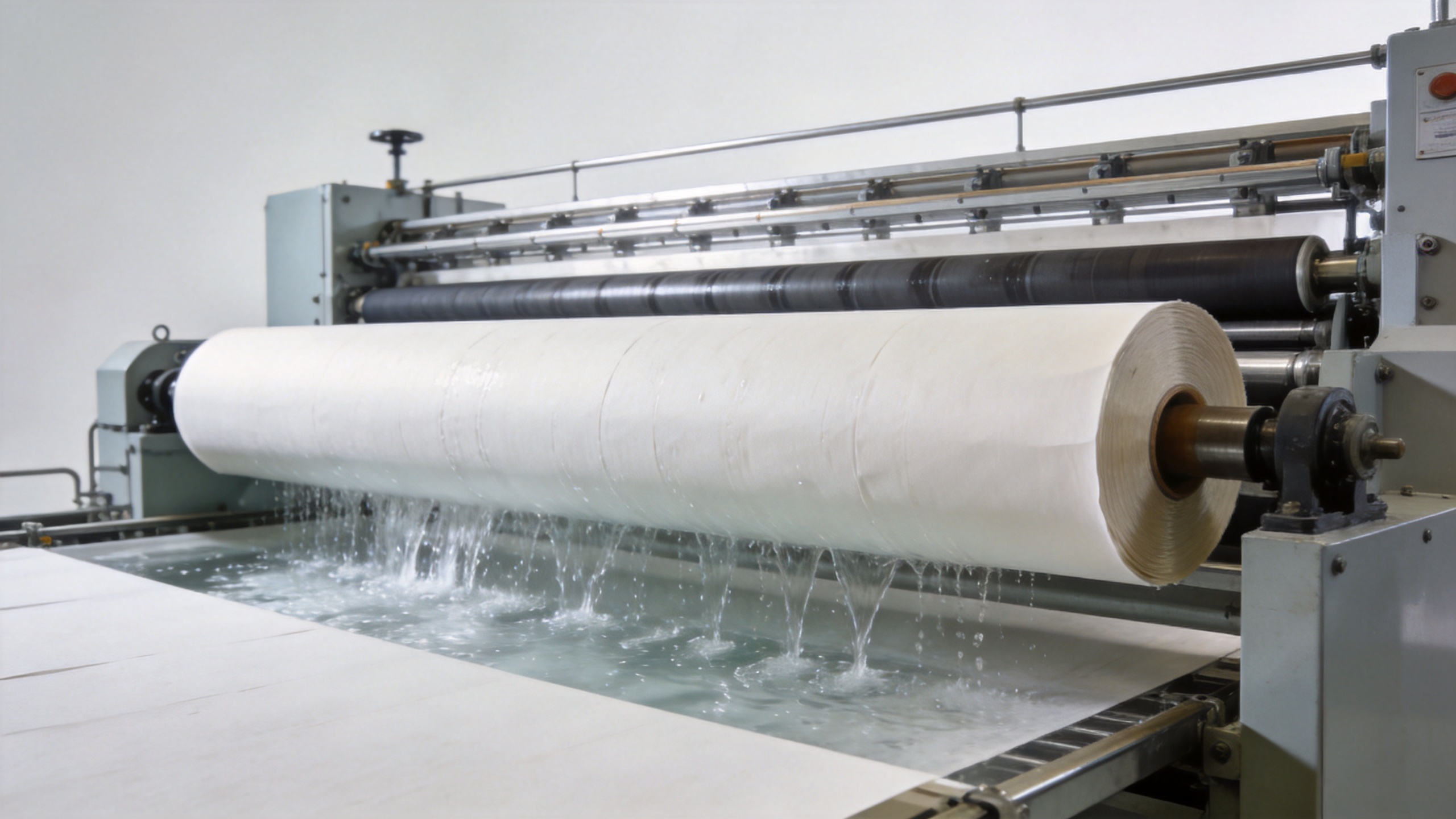
After stock reaches the forming section, water removal must remain predictable. A suction couch roll paper machine arrangement supports the final drainage and transfer of the wet web at the end of the forming section. If suction paths are restricted by buildup, dewatering can become less reliable. The result may be weak transfer, unstable sheet handling, or a lower practical line speed.
For that reason, mill teams should treat a suction couch roll paper machine inspection as part of the speed plan. Check suction-hole condition, shell and cover condition, vacuum behavior, doctor performance, and the cleanliness of related water systems. The paper production machine benefits when these checks are linked to observed runnability rather than performed only after a major interruption.
Controls help the paper production machine hold a repeatable pace
Modern controls can help a paper production machine hold conditions closer to target, but control hardware needs usable process signals. Stable basis weight, moisture, draw, and tension feedback give operators a clearer view of where the process is moving. A paper production machine with well-maintained sensors and clear alarm priorities can support faster response before a small deviation becomes a break or a long clean-up stop.
However, automation is not a substitute for a sound operating window. If the paper grade, furnish, felt condition, or vacuum capacity changes, the control strategy should be reviewed as well. In other words, a paper production machine can run faster only when its settings remain appropriate for the material and the equipment condition.
Reduce interruptions before pursuing higher peak speed
The most productive improvement is often a reduction in lost minutes. A paper production machine may gain more usable output by avoiding two web breaks or a contamination-related shutdown than by raising its nominal speed for a short period. This shifts the discussion from a single speed promise to a practical availability and stability review.
- Map each slowdown and break by location, grade, shift, and visible symptom.
- Verify that the paper cleaning machine is removing the contaminants it was selected to address.
- Inspect the suction couch roll paper machine system before drainage problems become transfer failures.
- Review draw, vacuum, moisture, and tension trends around the events that forced speed reductions.
- Confirm cleaning, lubrication, spares, and escalation responsibilities for the paper production machine.
A practical verification checklist for mill teams
Before approving a speed increase, document the operating conditions that make the current rate stable. The checklist should include furnish characteristics, grade changes, cleanliness requirements, drainage observations, vacuum limits, web-break history, and the condition of critical rolls. A paper production machine should be evaluated under representative production conditions, not only during a brief demonstration run.
It also helps to define acceptance criteria in advance. For example, the mill can agree on the observation period, quality measures, allowed interruption types, and maintenance actions required after the trial. This gives the production and maintenance teams a common basis for deciding whether the paper production machine truly enhances mill speed.
Conclusion
A paper production machine enhances mill speed by making stable operation easier: cleaner stock, dependable drainage, controlled web transfer, useful process feedback, and fewer interruptions. The right improvement path depends on the mill’s actual bottleneck. Start with evidence from slowdowns and breaks, then connect stock cleaning, suction-roll maintenance, and control discipline to the line’s usable operating window. That approach produces a more credible speed improvement than chasing a nameplate number alone.
 ONLINE