
 EN

What Users Experience with Cup Making Machine?
A cup making machine is easy to describe from the outside: paper blanks go in and finished cups come out. The operator’s view is more practical. What matters from one shift to the next is whether the material feeds cleanly, the cup shape remains consistent, seals hold up during sampling, and a small adjustment produces a predictable result. For a team considering a cup making machine, those everyday experiences are usually more useful than a headline speed figure alone.
From an operator’s perspective, one point becomes clear quickly: the machine, paper stock, tooling, heat settings, and working routine act as one system. A cup making machine can be productive when those conditions match. If they do not, users often spend their attention on jams, seal checks, and repeated fine-tuning. This article outlines the working experience a buyer or production manager should expect, and the questions worth resolving before a line is commissioned.
What the first days with a cup making machine feel like
New users commonly begin by learning the rhythm of the equipment rather than chasing maximum output. They confirm that cup blanks are oriented correctly, observe how material enters each forming station, and compare the first pieces against the target cup shape. This settling-in period is valuable because it makes the normal cycle visible: feeding, side-seam forming, bottom forming, heating or sealing, rim curling, discharge, and inspection.
During that period, operators generally become sensitive to small signs that something has changed. A shift in blank alignment, a less-clean rim, or a seal that needs extra attention can be an early cue to check the paper, tooling condition, temperature controls, or sensors. That does not mean every issue originates in the equipment. More accurately, it gives the team a repeatable place to start investigating.
For takeaway cup production equipment, a realistic onboarding plan leaves time for sample approval and written settings records. The goal is not to copy someone else’s parameters blindly. It is to document the conditions that produced an acceptable result.
Users notice material compatibility before they notice speed
Paper stock is part of the operating experience. A cup making machine receives blanks with a particular stiffness, coating, print condition, cut quality, and storage history. When the material changes, even subtly, the team may need to reassess feeding and forming behavior. This is why experienced users ask about their intended cup sizes and paper specifications early, instead of treating the machine as a universal setting-and-forget unit.
In daily work, material compatibility shows up in tangible ways: how consistently blanks separate, whether the formed body holds its intended shape, and whether the seam and bottom look uniform. If a production run begins to produce questionable pieces, users normally isolate one variable at a time. They check the material batch, confirm the setup, inspect the relevant forming and sealing areas, and then sample again. That sequence is slower than guessing, but it creates a clearer record of what actually changed.
A paper container maker evaluating a new line should therefore prepare representative samples, including the paper and cup formats that matter commercially. If the intended material and cup shape are already confirmed, a supplier discussion becomes much more useful because it can focus on the real operating window instead of a generic machine description.
The sealing station shapes confidence in every shift
Operators often judge a cup making machine by the confidence it gives them at the sealing stage. A cup can look acceptable at a glance yet still require a deliberate leak or seam check during quality control. General maintenance and troubleshooting guidance consistently points users back to the same areas: heating elements, sealing surfaces, temperature controls, paper material, and the condition or alignment of related components.
In ordinary production, users are not necessarily making major repairs. It is that they need a disciplined response when cup quality changes. A useful shift-start routine can include:
- checking that the selected paper blank matches the current production record;
- confirming that sealing and forming areas are clean before a run begins;
- reviewing the current settings against the approved sample conditions;
- inspecting early samples for seam appearance, bottom formation, rim quality, and obvious deformation; and
- recording any adjustment together with the result it produced.
This routine does not guarantee defect-free production. It gives users a method for separating a material question from a setup question and a maintenance question. In food-packaging work, that clarity matters more than an unsupported promise about output.
Changeovers reveal whether the workflow is truly manageable
Many buyers focus on the production run, but operators remember the moments between runs. A change in cup size, shape, or paper specification can require tools, approved settings, trial pieces, and a fresh inspection. A cup making machine feels easier to use when the changeover sequence is understood in advance and the team knows which parts of the setup must be reconfirmed.
The most useful preparation is specific. Before ordering, define the cup sizes, paper types, print formats, expected production rhythm, and likely changeover frequency. Then ask how those requirements affect the configuration review, tooling plan, operator training, and acceptance criteria. For takeaway cup production equipment, a line that matches a narrow range of repeated formats may call for a different discussion from one that must support frequent product changes.
Users also value clear handoffs. When the person setting up the machine can leave a short record for the next shift—material used, cup format, observations, adjustments, and inspection outcome—the line is less dependent on memory. That is a modest process habit, but it can make daily operation calmer and more traceable.
What maintenance feels like in practice
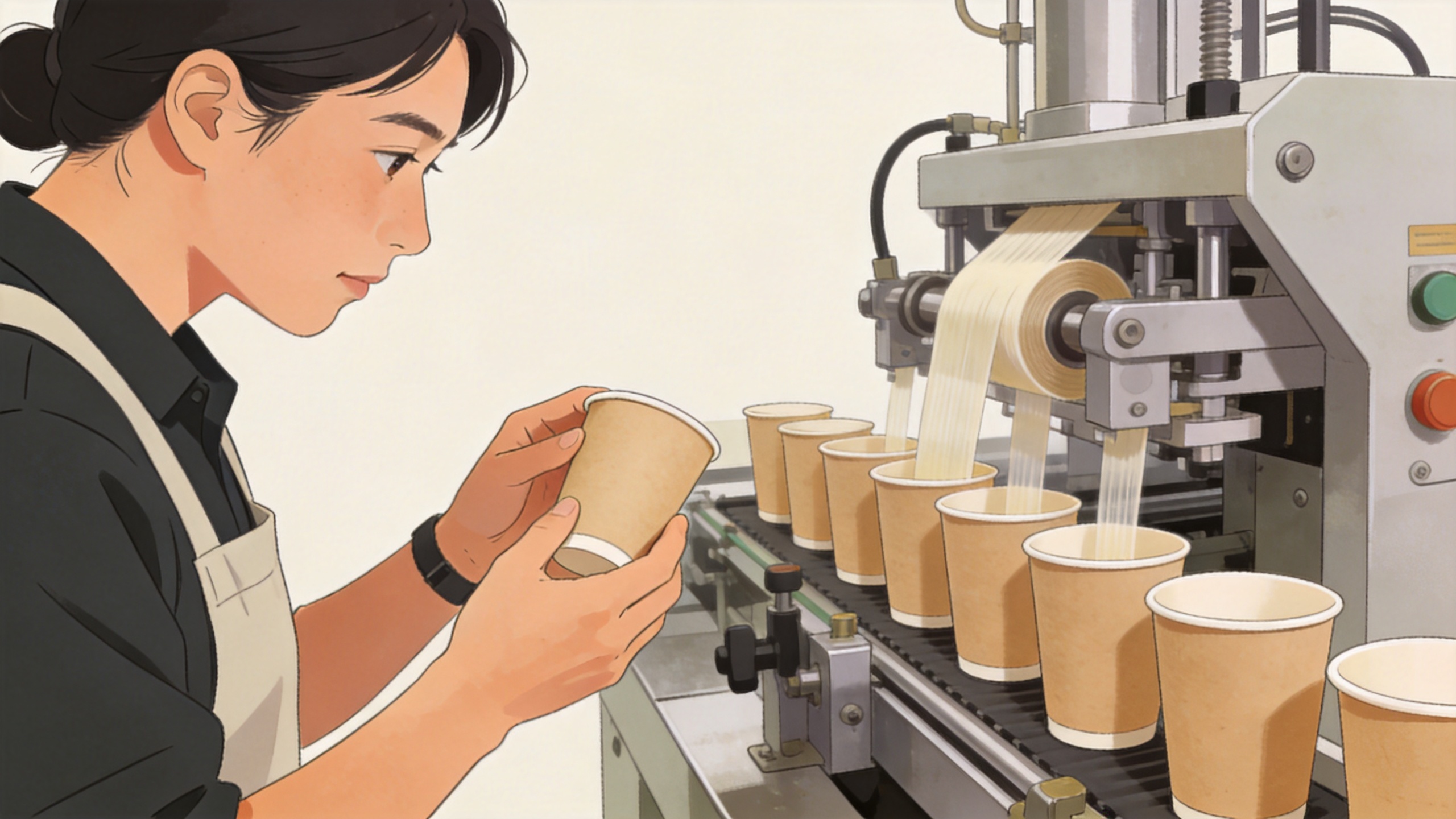
Routine care is part of the user experience, not an interruption to it. Operators and maintenance staff generally need access to the points that require inspection or cleaning, plus a shared understanding of what an abnormal sound, vibration, feed issue, or seal result should trigger next. A good maintenance conversation is therefore about practical visibility: what the team can inspect during normal work, what needs scheduled attention, and when a technical review is appropriate.
It is also sensible to distinguish a routine check from a diagnosis. Cleaning accessible working areas and reviewing visible condition can be regular tasks. Investigating a recurring quality issue may require the team to pause, review settings and material, and inspect the relevant components in a controlled order. In other words, users benefit from a plan that protects both cup quality and safe working practice rather than from a vague instruction to “maintain the machine.”
What users want from a paper container maker before purchase
Before committing to a cup making machine, users typically want fewer assumptions. They want to know which cup formats are in scope, what samples should be supplied, how acceptance will be defined, and what support information will accompany installation and commissioning. For cross-border projects, communication on documentation, installation support, and destination requirements deserves the same attention as the machine configuration.
A practical pre-purchase checklist includes the following questions:
- Which cup sizes, shapes, and paper specifications will be evaluated?
- What does an acceptable seam, bottom, rim, and overall cup appearance look like for our application?
- Which settings or setup items should be recorded for each approved format?
- How will changeovers, operator training, routine inspection, and escalation be handled?
- What installation, technical communication, and spare-parts arrangements should be clarified before handover?
These questions turn a broad machine comparison into an operating plan. ZheJiang RUIDA Machinery focuses on paper cup and food-packaging equipment, including automatic paper cup machine directions. The most useful project discussion starts with the buyer’s actual cup application, material, and production conditions so that the configuration review can be grounded in those needs.
Final view: a cup making machine is experienced through repeatable control
Users do not experience a cup making machine as a specification sheet. They experience it through the consistency of the feed, forming, sealing, inspection, changeover, and maintenance routines around it. A machine can support a stable workflow when cup format, paper material, process conditions, and team procedures are confirmed together.
For buyers of a cup making machine, the most productive next step is to prepare representative cup samples and a clear operating brief. Include the target formats, paper characteristics, output expectations, changeover needs, and quality checks. That gives every stakeholder a better basis for discussing takeaway cup production equipment and selecting a paper container maker that can address the right questions without overpromising.
 ONLINE