
 EN

Why Paper Making Machine Is Crucial for Mills?
A paper mill is not simply a collection of tanks, pumps, rolls, and utilities. Its output is governed by the system that turns prepared fibre into a continuous, saleable web. That is why a paper making machine is crucial for a mill: it coordinates formation, water removal, drying, finishing, and winding into one repeatable process. When that process is stable, a mill has a better basis for planning output, meeting grade requirements, and controlling the cost of disruption.
From a B2B procurement perspective, the useful question is not whether a paper making machine has an impressive nameplate speed. It is whether the machine and its supporting systems fit the intended furnish, paper grade, operating rhythm, and maintenance capability. A higher maximum speed does not compensate for frequent breaks, unstable moisture, slow grade changes, or a bottleneck downstream.
The machine turns pulp preparation into marketable paper
Stock preparation makes fibre suitable for a target grade, but value is created only when that suspension becomes a sheet with usable formation, strength, moisture, and surface properties. The paper making machine links those requirements in sequence. At the wet end, the stock is distributed and water begins to leave the web. The press section removes more water mechanically. The dryer section then reduces moisture further, while later finishing and winding stages prepare the sheet for shipment or conversion.
Each section affects the next one. Poorly controlled formation can make later correction difficult. Weak press performance can push an unnecessary burden toward drying. Uneven drying may appear later as curl, dimensional variation, runnability trouble, or quality complaints, depending on the grade. For this reason, mills should treat the line as an integrated production system rather than judge a paper making machine by one section or one quoted capacity figure.
Why stable runnability matters as much as rated output
Every mill wants more good tonnes per shift, yet “more speed” is only one part of that outcome. What matters in day-to-day operation is steady production of paper that meets the agreed specification. A paper making machine that runs consistently helps operators protect the web through transitions, maintain usable tension, and reduce avoidable interruptions. That gives production teams a more predictable base for scheduling reels, coating or converting work, maintenance windows, and customer commitments.
When evaluating a machine, ask how the design supports the operating realities around it: furnish variability, planned grade changes, operator access, cleaning routines, control visibility, and the availability of wear parts. If a mill changes grades often, predictable changeover procedures can be more valuable than a peak-speed number that is difficult to sustain. If the product is highly sensitive to moisture or profile variation, measurement and control discipline deserve the same attention as mechanical capacity.
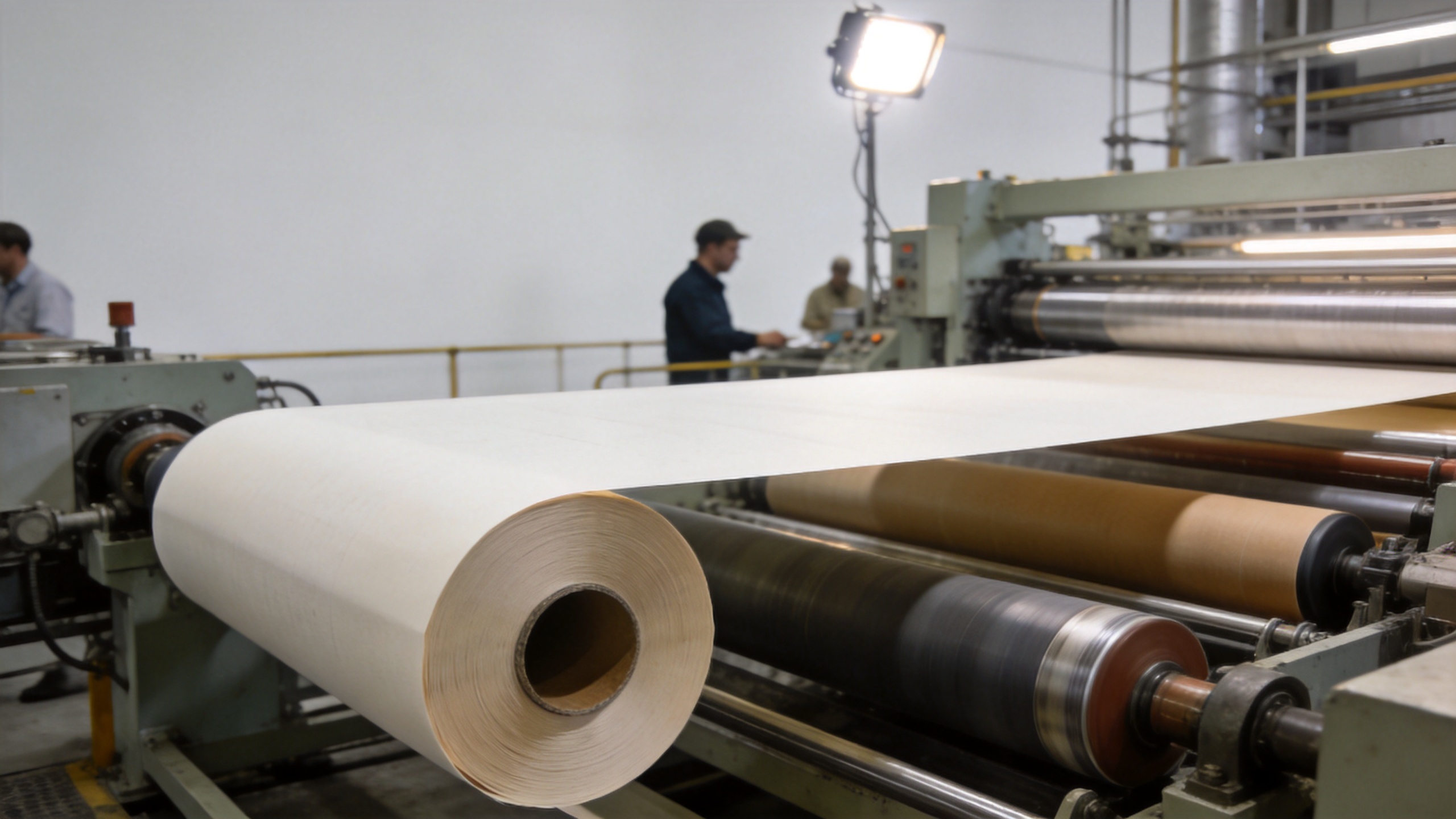
Water removal makes the paper making machine an energy decision
Water is essential early in papermaking, but removing it efficiently is central to mill economics. Mechanical removal in the press section is generally preferable to asking the dryer section to do all of the work with heat. The relationship is not a promise of a fixed energy saving; it is a reason to review the whole water-removal chain when production costs or quality drift become concerns.
Industry technical guidance addresses paper-machine water removal, drying rate, steam, condensate, and energy conservation because these conditions change with the machine and the grade. In practical terms, a mill benefits when it can monitor moisture profiles, press condition, drainage behaviour, steam use, and condensate performance instead of waiting for a major quality event. Regular observations can reveal where a paper making machine is shifting away from its intended operating window.
- Better drainage and pressing can reduce the drying load that follows.
- A stable moisture profile supports more consistent finishing and winding.
- Accessible controls and maintenance points make routine checks easier to complete.
- Reliable data trends help a mill distinguish a process issue from a material or utility issue.
Quality is built into the web, not inspected in at the end
A finished reel can be measured after production, but many quality outcomes are shaped earlier. Fibre distribution, basis-weight control, press loading, drying conditions, surface treatment, and calendering all influence the result. A paper making machine is therefore crucial because it gives the mill a controlled path from pulp to specification, not merely a way to make a roll.
This distinction matters when a mill serves several grades. Packaging, tissue, printing, board, and specialty papers can place different demands on formation, bulk, strength, smoothness, absorbency, or surface treatment. A sound approach is to define the required properties first and then check whether the machine concept, controls, auxiliaries, and finishing stages can support them. A mill should also document what must be verified during trials rather than assume that a general machine description guarantees a particular grade outcome.
Capacity planning needs a system view
In capital discussions, it is tempting to compare only width, design speed, or annual-tonnage estimates. Those figures matter, but a paper making machine performs inside a wider system. Stock preparation, approach flow, vacuum, steam and condensate, drives, automation, winding, and logistics must all keep pace. The limiting point may be outside the machine itself.
A useful review follows the paper path and the support path together. First, define the grades and production mix. Next, map the expected web path through forming, pressing, drying, finishing, and winding. Then identify the utilities and downstream equipment required to sustain that plan. That shifts the discussion from a catalogue comparison to an operating model. It also helps teams see whether they need a new line, a rebuild, a control upgrade, or targeted work on a recurring bottleneck.
Where auxiliary equipment fits—and where it does not
Some related equipment serves a valuable but different purpose. A paper tag making machine, for example, is typically associated with downstream conversion of paper or board into tags rather than the continuous manufacture of the base sheet. It may be relevant to a converter’s product plan, but it does not replace the wet-end, press, dryer, and finishing functions of a mill-scale paper making machine.
Likewise, a hand made paper machine can be useful for educational, craft, sampling, or small-batch purposes. Its operating logic may help explain sheet formation, but its scale and production objectives differ from a continuous industrial line. Keeping these categories separate makes requirements clearer and prevents a mill from comparing equipment that solves different problems.
A practical checklist before investing or upgrading
- Define the grade mix: list furnish, target basis weights, width, moisture expectations, and required paper properties.
- Identify the real constraint: confirm whether the issue is capacity, quality, energy, breaks, changeovers, maintenance access, or a utility limitation.
- Review each process section: assess forming, pressing, drying, finishing, and winding as connected decisions.
- Check measurement and controls: decide which profiles, alarms, and trend data operators need to keep the line within its operating window.
- Evaluate lifecycle support: include installation planning, spares, training, service access, and the time required for trials and ramp-up.
- Set acceptance criteria early: agree on the conditions and tests that will demonstrate the desired outcome for the actual grade mix.
Conclusion
A paper making machine is crucial for mills because it is the point where material, energy, controls, and operating discipline converge into a product customers can use. The strongest decision is not automatically the largest or fastest machine. It is the one whose process sections, controls, support systems, and service plan match the mill’s grades and operating priorities. By examining runnability, water removal, quality control, and lifecycle needs together, a mill can make a more durable production decision.
 ONLINE