
 EN
EN
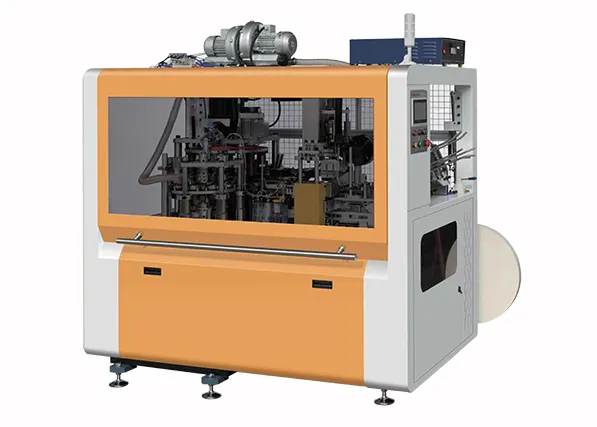
Automation and AI Integration in Paper Cup Machine Operations
The Role of Artificial Intelligence in Optimizing Paper Cup Machine Performance
Today's paper cup manufacturing equipment incorporates artificial intelligence to tweak things like heat levels, pressure settings, and how fast materials get fed into the machine based on what sensors are picking up in the moment. The smart algorithms running behind the scenes keep everything within the sweet spot for forming cups properly, cutting down on wasted materials somewhere around 25-30% compared to older methods. And there's another bonus too these intelligent systems can actually forecast when parts start wearing out, so technicians know when to schedule repairs before something breaks down completely. This kind of predictive maintenance means machines last longer and production lines stay running without those frustrating unexpected stoppages that cost money and time.
How Automation Reduces Human Intervention in Paper Cup Production
In modern automated paper cup production lines, smart sensors and machine vision tech have pretty much taken over from traditional manual checks. These high-res camera systems can scan upwards of 1200 cups every single minute looking for issues like wobbly edges or poorly sealed tops something no human inspector could possibly match. The switch to automated inspection cuts down on staffing expenses and basically wipes out those pesky human mistakes. Some top-of-the-line systems run non-stop for well over three days straight thanks to their self-calibrating features, making them a real workhorse for manufacturers concerned about both quality control and operational efficiency.
Case Study: AI-Driven Fault Detection in Full Servo Models
During some tests back in 2023, one big name in manufacturing put an AI system to work finding faults in those fully automated paper cup machines, and it actually managed to slash unexpected stoppages by around 40%. What makes this system special is how it looks at over 15 different factors at once. We're talking things like the air's moisture level, how sticky the glue is getting, and the force being applied by the servos. All these get checked against past records, and any weirdness gets spotted in just under a second flat. The results? A pretty impressive boost in Overall Equipment Effectiveness (OEE) metrics, jumping 22 percentage points ahead of older machine versions that didn't have such smart monitoring capabilities built in.
Trends in Intelligent Control Systems for Enhanced Operational Consistency
Modern paper cup machines connected to the Internet of Things come equipped with central monitoring panels tracking well over fifty different performance indicators across several production lines at once. Some notable improvements worth mentioning are smart algorithms that automatically tweak rim curling pressure when dealing with varying paper stocks within a range of plus or minus fifteen grams per square meter. There's also predictive maintenance running in the cloud through thermal sensors and vibration checks, plus special energy saving features cutting down electricity usage by around eighteen percent during long production runs. All these upgrades enable factories to keep defects under half a percent while staying online most of the time, which matters a lot when fulfilling big orders for food service packaging companies nationwide.
Servo-Driven Precision and High-Speed Production Mechanisms
From Mechanical to Digital: The Evolution of Paper Cup Forming Machine Technology
The paper cup machine industry has come a long way since those old school mechanical setups with all those cams and gears making noise every time they turned. Back in the day, these early machines could barely manage around 80 to maybe 100 cups a minute before needing constant adjustments. Fast forward to now, modern digital versions run on sophisticated servo technology and can crank out over 400 cups per minute while maintaining incredibly tight tolerances of plus or minus 0.05 millimeters. A recent study published last year by automation engineers shows something pretty interesting too these new systems actually cut down on mechanical wear by about two thirds when compared to their older counterparts. That kind of efficiency makes a big difference for manufacturers looking to reduce downtime and maintenance costs.
Servo Motors and High-Speed Production Enabling Precision Manufacturing
In the crucial cup-forming process, servo motors can achieve rotational accuracy down to just 0.01mm. These motors stay cool thanks to smart cooling systems that keep operating temperatures under 45 degrees Celsius even when running nonstop. Another benefit comes from regenerative braking technology which actually reduces energy consumption by around 22% compared to older motor designs. The motors also feature adaptive tuning capabilities that adjust torque on the fly based on material thickness changes of plus or minus 5%. Looking at recent industry data from 2024, manufacturers who implemented these advanced servo systems saw improvements in forming consistency by approximately 18% specifically in food grade packaging applications where precision is absolutely essential.
Advanced Rim Curling and Bottom Sealing With Thermal and Pressure Control
Today's sealing systems bring together infrared temperature monitoring covering around 50 to 200 degrees Celsius with those PID controlled pressure actuators, all working together to keep seal quality steady even when conditions change. The combination works wonders for several problems at once. It stops that pesky polyethylene leakage from happening in those hot drink cups we all know and love. Also helps maintain proper curl tension so stackable designs actually work as intended. And let's not forget about eliminating that annoying adhesive mess that tends to happen during fast paced manufacturing runs. With multi zone thermal profiling now standard practice among top manufacturers, they're hitting seal defect rates below 0.2 percent these days. That represents something like four times better performance compared to what was available back in the early 2010s, according to industry benchmarks.
Data Point: 99.6% Seal Integrity Achieved in Full Servo Models (2023)
Third-party testing of 2023 full servo models revealed significant quality improvements:
| Metric | 2020 Models | 2023 Models | Improvement |
|---|---|---|---|
| Seal Failure Rate | 1.8% | 0.4% | 4.5× |
| Pressure Consistency | ±12% | ±3% | 300% |
| Energy per Seal | 18J | 9J | 50% |
These advances support compliance with FDA standards and allow operations at 97%+ uptime in high-demand environments.
IoT and Real-Time Monitoring for Smart Manufacturing
Integration of IoT for predictive maintenance and remote diagnostics
Sensors connected through the Internet of Things now watch over thermal seals, servo motors, and all sorts of important parts inside today's paper cup machines, gathering around 200 bits of information every single second. These smart systems run predictive algorithms that look at vibrations, temperatures, and pressure changes across the machine. They can spot problems such as worn bearings or drifting calibration settings as much as three days before something actually breaks down. According to research from last year, companies using this technology saw their unexpected downtime drop by about 30 percent in packaging equipment. When manufacturers get early warnings, they can plan maintenance work during regular shutdown periods instead of dealing with expensive surprises mid-production. The latest Smart Manufacturing Report from 2024 shows how cloud-based diagnostic tools let technicians fix nearly nine out of ten electromechanical problems without setting foot on site, which cuts service expenses roughly in half compared to traditional methods.
Real-time monitoring dashboards improving production transparency
Modern IoT platforms come with centralized dashboards that monitor important factors like output speed, seal quality, and power consumption across production lines. When any parameter drifts more than 2 percent away from normal levels, workers get notifications so they can make quick fixes before anything goes wrong. According to a recent study from McKinsey looking at around 120 different facilities, factories using IoT monitoring saw about a 22 percent boost in consistent performance specifically for making disposable packaging products. This happened because machines could better manage tricky details such as controlling the temperature during rim curling processes and adjusting paper feed tension accurately. The systems automatically create records of all operations which helps meet those strict requirements for food safety standards. Looking at what's happening now rather than just predictions, we're already seeing most manufacturers moving toward real time monitoring solutions if they want to stay ahead in today's fast paced manufacturing world.
Fully Automatic vs Semi-Automatic Paper Cup Machines: A Technical Comparison
Differences in automation level: Output, cost, and maintenance
Fully automatic and semi-automatic paper cup machines differ significantly in output, cost, and maintenance needs. Fully automatic systems produce 200–300 cups per minute with less than 1% waste, whereas semi-automatic models average 30–50 CPM and require manual quality checks. Initial investment and ongoing costs reflect this divide:
| Criteria | Fully Automatic | Semi-Automatic |
|---|---|---|
| Setup Cost | $120k–$450k | $25k–$80k |
| Labor Cost/Month | $2k–$5k | $6k–$10k |
| Maintenance Complexity | High (trained technicians required) | Low (operator-managed) |
Despite higher upfront costs, fully automatic machines are more economical at scale. However, semi-automatic models remain viable for small businesses, especially in regions with lower labor costs (Intellectual Market Insights 2023).
Production capacity and efficiency: Full servo vs semi-servo systems
Full servo systems achieve 99.6% seal integrity through closed-loop thermal control, as confirmed in 2023 studies. Fully automatic machines utilize multi-lane processing to quadruple output compared to single-lane semi-automatic units. In terms of energy use:
- Full servo: 18–22 kWh at peak production
- Semi-servo: 8–12 kWh, but with frequent manual downtime
Recent industry analyses show automated systems typically recover their higher initial investment within 18–24 months when operating at 60% capacity utilization.
When semi-automatic machines still outperform fully automatic ones
Semi-automatic machines excel in flexibility, making them ideal for custom orders such as medical cups under 50 ml or specialty formats over 500 ml. Advantages include:
- Rapid tooling changes (under 15 minutes vs. 2–4 hours in automated systems)
- Suitability for small batches under 5,000 units
- Compatibility with hybrid materials like PET-lined or compostable PLA layers
A 2024 flexibility study found semi-automatic machines reduced setup waste by 37% in small-batch scenarios. These models dominate niche markets requiring fewer than 10 million units annually, particularly in emerging economies with fragmented demand.
FAQ Section
What is the impact of AI on paper cup machines?
AI optimizes performance by adjusting settings in real-time, reducing material waste, predicting maintenance needs, and minimizing unexpected stoppages.
How does automation affect human intervention in production?
Automation reduces manual checks, cuts down on staffing costs, and enhances operational efficiency with high-resolution camera systems.
What are the differences between fully and semi-automatic paper cup machines?
Fully automatic machines have higher output and efficiency, while semi-automatic models offer flexibility for custom orders and lower costs for small batches.