
 EN
EN
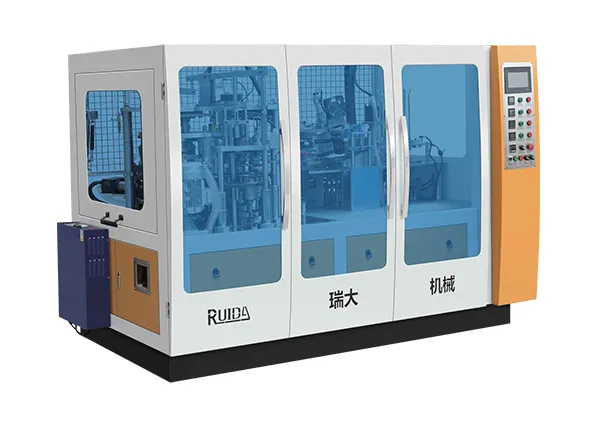
High Production Efficiency and Output Speed About Paper Bowl Machine
Modern paper bowl machines achieve unprecedented production speeds through optimized mechanical design and intelligent process control. Unlike legacy equipment limited to 80–120 units/minute, current models operate at 200–300 units/minute while maintaining ISO 14644-1 cleanliness standards—a 150% throughput improvement according to 2023 packaging industry benchmarks.
Unmatched Speed in Modern Paper Bowl Machine Operations
Advanced servo motors and PLC synchronization enable rapid material feeding and forming. The 2024 Flexible Packaging Report notes that top-tier machines reduce cycle times by 40% compared to 2020 models through predictive maintenance algorithms.
Rapid Production Capability Reducing Downtime
Automated jam detection systems recover from interruptions in under 2 seconds, versus 15–30 seconds in conventional setups. This feature preserves 98.6% operational uptime—critical for factories producing over 50 million bowls monthly.
Precision-Engineered Forming for Consistent Output
Dual-laser alignment systems ensure bowl wall thickness variations stay within ±0.1 mm. At peak output (300 units/minute), this precision prevents material waste exceeding $7,200 per month in high-volume facilities.
Case Study: 30% Output Increase With Upgraded Paper Bowl Machine
A European manufacturer achieved 122 bowls/minute (up from 94) after retrofitting their machine with high-torque rotary actuators, infrared drying tunnels (reducing curing time by 58%), and real-time weight monitoring.
Trend Analysis: Rising Demand for High-Speed Packaging Solutions
The foodservice sector's shift toward compostable bowls drives 19.2% annual growth in high-speed machine orders (Allied Market Research 2024). Manufacturers with 250 units/minute capabilities capture 63% of new market opportunities compared to slower competitors.
Advanced Automation and Technology Integration
Seamless Automation Powered by PLC Control Systems
Modern paper bowl machines use PLC (Programmable Logic Controller) systems to monitor temperature, pressure, and speed in real time, achieving error margins under 0.3% in shaping operations. Facilities using PLC-driven systems report 72% fewer manual interventions and maintain 99.4% uptime.
Ultrasonic Sealing Technology for Durable, Clean Joins
Ultrasonic sealing replaces adhesives with high-frequency vibrations to bond seams without chemicals, eliminating residual odors and reducing material waste by 18%. Food packaging facilities adopting this technology see a 40% drop in leak-related product recalls.
Integrated Dust Extraction for Cleaner Operation
Cyclonic dust extraction systems capture 95% of airborne particles during cutting and shaping phases. These closed-loop systems meet Industry 4.0 cleanliness benchmarks, minimizing contamination risks in facilities producing over 15,000 bowls/hour.
Balancing Fully Automated vs Semi-Automated Paper Bowl Machines for ROI
Fully automated systems reduce labor costs by $5.2/hour per production line, while semi-automated models offer 34% lower upfront investment. For manufacturers producing under 8 million bowls annually, hybrid configurations—automated forming with manual quality checks—often deliver superior ROI.
Cost Efficiency and Long-Term Return on Investment
Calculating ROI for Mid-Range Paper Bowl Machine Installations
A mid-range machine producing 250,000 units/day generates $740k in annual revenue (Ponemon 2023). ROI is determined by balancing equipment costs ($150k–$300k), 12–18% lower material waste, and labor savings from automated quality control. Industry analysis shows modern machines recover initial investments within 26 months at 75% capacity utilization.
Energy-Conscious Design Reducing Long-Term Operational Costs
New-generation machines consume 23% less energy than 2019 models due to variable frequency drives, heat recovery systems (repurposing 85% of sealing station energy), and LED inspection lighting (9W vs 45W). According to the 2024 Sustainable Manufacturing Survey, these features cut annual energy costs by $18,700 per machine in continuous operation.
Case Study: Payback Period Under 18 Months in European Facilities
A factory located in Munich managed to get back its investment within just over 17 months after they installed those automated paper bowl machines. Several things contributed to this quick return on investment. First off, there was a significant drop in wasted cellulose materials - around 31 percent actually. Then there's the fact that these machines can run non-stop throughout the day, especially when customer demand spikes. Plus, thanks to some EU green manufacturing tax breaks, companies get reimbursement for about 15% of what they spend on new equipment. These financial benefits line up perfectly with the latest EU Packaging Directive from 2023. This directive requires manufacturers to cut down energy usage by 40% for producing single-use containers before 2027 rolls around. So not only does going green save money now, it also positions businesses well for future regulatory requirements.
Compliance with Food Safety and Environmental Standards
Meeting FDA, LFGb, BRC, and EU SUP Standards with Certified Paper Bowl Machines
Certified machines comply with FDA food contact regulations (21 CFR 176.170 guidelines), BRCGS hygienic design protocols, and EU Single-Use Plastics Directive requirements. They process biodegradable PLA linings at speeds exceeding 100 units/minute while meeting LFGB chemical safety thresholds and EN 13432 compostability standards.
How Compliance Reduces Legal Risk and Market Entry Barriers
Pre-certified systems shorten customs processing by 18–22 days in OECD markets and reduce liability insurance premiums by 34%. Automated quality logs help satisfy FDA 21 CFR Part 11 electronic records requirements, helping manufacturers avoid average recall costs of $740k.
Navigating the Challenge of Eco-Friendly Materials Within Regulatory Frameworks
Machines capable of switching between PLA and traditional linings in under two hours support compliance with evolving mandates. Precision temperature controls (±1°C) ensure seal integrity across materials while meeting EU SUP Directive thickness specifications for disposable foodservice items.
Customization Capabilities for Diverse Packaging Needs
Versatile Adjustability for PE, PLA, and Aluminum Foil Linings
Modern machines transition seamlessly between polyethylene (PE), polylactic acid (PLA), and aluminum foil linings without manual recalibration. Tool-less die systems reduce changeover time by 40%, enabling quick adaptation to market shifts like the 32% annual growth in PLA-lined bowls (Food Packaging Trends Report 2024).
Adapting to Diverse Bowl Sizes and Shapes Without Tool Changes
Quick-adjust mechanisms accommodate containers from 8 oz to 32 oz in minutes, eliminating downtime from mold swaps. Facilities producing mixed packaging lines report a 29% productivity boost, making this capability essential for contract manufacturers serving both niche brands and large distributors.
Demand Trends for Customizable Compostable Bowls in Foodservice
Seventy-eight percent of foodservice operators now prioritize customizable compostable bowls for takeout (2024 National Restaurant Association survey). Municipal bans—like Seattle's Sustainable Packaging Ordinance—accelerate demand. Machines that imprint brand logos directly onto PLA-lined bowls are adopted 45% faster than standard models.
Strategy: Aligning Machine Flexibility With Brand-Specific Packaging
Modular paper bowl machines allow private-label clients to customize textures, shapes, and UV-printed designs. A 2023 packaging innovation report found brands using custom-shaped bowls achieved 19% higher shelf visibility, turning packaging into a strategic marketing tool without sacrificing efficiency.
FAQ
Q1: What is the production speed of modern paper bowl machines?
A1: Modern paper bowl machines operate at speeds of 200–300 units per minute, significantly faster than older models which are limited to 80–120 units per minute.
Q2: How do advanced paper bowl machines reduce downtime?
A2: They use automated jam detection systems that recover from interruptions in under 2 seconds and feature precision-engineered forming for consistent output, reducing material waste.
Q3: What role does automation play in paper bowl machine operations?
A3: Automation, powered by PLC control systems, allows for real-time monitoring and reduces manual interventions, contributing to high uptime and efficient operations.
Q4: How do compliance standards impact paper bowl machine operations?
A4: Certified machines comply with FDA and EU standards, reducing legal risks and easing market entry barriers while supporting eco-friendly material use.
Q5: Can these machines be customized for different packaging needs?
A5: Yes, modern machines offer versatile adjustability for various linings and adaption to different bowl sizes and shapes, catering to diverse market demands.