
 EN
EN
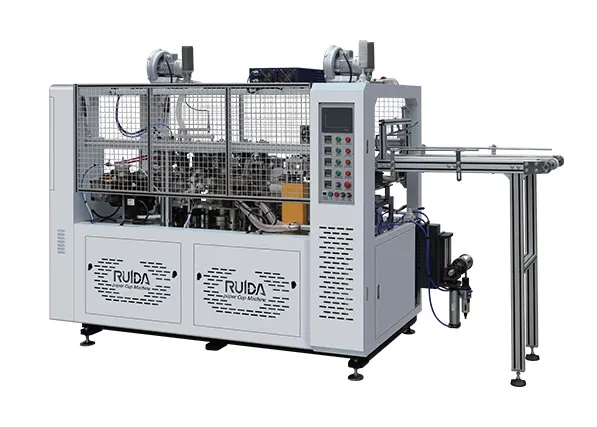
Transforming Manufacturing with Automated Paper Bowl Machines
How the paper bowl machine modernizes traditional production methods
Back in the day, making paper bowls was all about people moving materials around manually and doing quality checks that weren't always consistent. This led to roughly 5 to 7 percent of products getting wasted during production. Now automated machines have taken over from those old ways. These modern systems feature synchronized molding stations capable of churning out anywhere between 600 and 1,200 bowls every single hour, all while keeping dimensions within about plus or minus 0.2 millimeters. The precision actuators and servo driven components basically take away any chance of human mistakes happening during important steps such as distributing pulp and sealing edges properly. As a result, factories see first pass yields climbing past 98.5%, which is way better than the 82 to 85% range seen when everything had to be done by hand.
Seamless integration into existing production lines for operational continuity
The latest paper bowl machines come equipped with standard connections that work pretty well with older packaging systems and most ERP software setups in around two to three days typically. What this means for factory owners is they can keep about 80 to 90 percent of what they already have installed while still getting all the benefits of newer bowl forming tech. These machines are built in modules too, so companies don't have to overhaul everything at once. They might start by automating just one line first, then slowly expand throughout their operations as needed. This approach cuts down on upfront costs significantly since businesses aren't throwing away their current investments overnight.
Smart sensors and IoT in paper bowl machines enable real-time monitoring
Vibration sensors embedded in equipment can spot bearing wear anywhere from 50 to maybe even 70 hours before it actually fails. At the same time, infrared thermography modules keep an eye on motor temps with pretty good accuracy down to half a degree Celsius. The Internet of Things stuff really makes a difference here. Industry studies have shown that these connected systems cut down unexpected equipment shutdowns somewhere around 32% to 40%. When operators look at centralized dashboards, they get early warnings about things like sudden humidity shifts or changes in pulp consistency. This heads-up lets them make adjustments before problems happen, which means less wasted materials overall. Some production reports indicate savings between 18% and 22% just from being able to react faster to these kinds of issues.
Transforming Manufacturing with Automated Paper Bowl Machines
Driving High-Speed, Scalable Production to Meet Market Demand
Modern paper bowl machines achieve production speeds of 800–1,200 units/hour, enabling manufacturers to scale operations precisely with market needs. This high-speed output directly addresses the 23% annual growth in eco-friendly packaging demand (Smithers 2023), allowing businesses to expand without costly facility upgrades.
High-Speed Output of Paper Bowl Making Machines Ensures Scalability
The Modular Automation Market Report 2023 shows production flexibility reduces reconfiguration costs by 40% when scaling operations. Paper bowl machines achieve this through swappable molds and adjustable pressure settings that accommodate diverse product specifications—from 4 oz salad containers to 32 oz soup bowls—without slowing throughput.
Data Point: Average Production Increase of 60–80% After Machine Adoption
Operators report 72% faster cycle times when upgrading from manual folding systems to automated paper bowl machines. This aligns with industry data showing automated converters achieve 11,520 daily units versus 6,400 units with semi-automated systems.
Meeting Rising Global Demand for Eco-Friendly Disposable Containers
With 68% of consumers willing to pay premium prices for sustainable packaging (Mintel 2023), automated paper bowl production helps manufacturers capitalize on the $6.8 billion biodegradable foodware market.
Strategies for Aligning Output With Seasonal Demand Fluctuations
Smart production scheduling in paper bowl machines enables:
- 35% faster material changeovers during peak seasons
- Inventory buffer creation during off-peak months
- Just-in-time manufacturing through IoT-enabled order tracking
Reducing Labor Costs and Operational Dependencies Through Automation
Automation Significantly Lowers Labor Requirements in Paper Bowl Production
The latest paper bowl manufacturing equipment cuts down on hands-on work by around 60 to 75 percent when compared with old school assembly methods, as noted in the recent Manufacturing Automation Report from 2023. These machines come equipped with robotic arms for moving materials around and built-in systems that automatically check for flaws, so workers don't have to stack bowls manually or spend hours looking for defects. What this means for factory owners is they can shift their workforce towards overseeing operations or focusing on more complex parts of production without worrying about inconsistent output levels across shifts.
Reduced Training and Supervision Needs with Automated Paper Bowl Machines
- Simplified onboarding: Operators require 40% fewer training hours due to intuitive touchscreen controls and preset production templates
- Automated error detection: Integrated vision systems reduce supervision needs by flagging alignment issues or material jams in real time
- Remote monitoring: Managers oversee multiple machines simultaneously, cutting supervision hours by 55% (Industry Week 2023)
Case Study: Measurable Labor Cost Reduction After Implementing Automation
A Midwest packaging manufacturer achieved a 65% reduction in labor costs within 8 months of installing automated paper bowl machines. Key outcomes from their 2024 Industrial Efficiency Study:
| Metric | Pre-Automation | Post-Automation |
|---|---|---|
| Hourly labor costs | $38 | $13 |
| Defect-related waste | 12% | 3% |
| Overtime expenses | $18k/month | $4k/month |
The system achieved full ROI in 12 months through reduced staffing needs and higher production uptime.
Ensuring Consistent Quality and Protecting Brand Reputation
Precision Engineering Minimizes Product Defects
Modern paper bowl machines integrate micron-level tolerance controls and servo-driven forming systems, reducing dimensional variances by 85% compared to semi-automatic equipment. This precision prevents critical failures like seam gaps or uneven rims—defects responsible for 62% of foodservice packaging rejections in 2023.
Uniform Output Strengthens Customer Trust
Automated production maintains ±1.5% weight consistency across 10,000+ units, eliminating manual handling errors that caused 23% of historical customer complaints. Manufacturers using these systems report 91% fewer bulk order returns annually, aligning with findings from quality assurance studies demonstrating how consistency drives buyer retention.
Case Study: 41% Faster Compliance Certifications
A U.S. manufacturer reduced quality inspection time by 76% after adopting automated paper bowl machines, achieving ISO 22000 certification in 11 weeks instead of 19. Their defect rate dropped from 8.2% to 0.9%, enabling contracts with three national restaurant chains requiring ≤1% tolerance standards (Netsuite 2024).
Maximizing Uptime and Long-Term Savings with Predictive Maintenance
Predictive Maintenance Reduces Unplanned Downtime in Production
The latest paper bowl machines now come equipped with smart systems that can spot potential problems long before they actually happen. These advanced tools look at things like how the machine vibrates, what kind of heat it gives off, and changes in how much power it uses. Most of the time, operators get warnings about worn bearings or crooked motors anywhere from six to eight weeks ahead of any actual breakdown. Some folks ran tests back in 2023 and saw that companies adopting this tech cut down on unexpected stoppages by almost half when compared to old fashioned maintenance schedules. This means fewer production hiccups and happier factory managers who no longer have to deal with surprise equipment failures disrupting their workflow.
IoT-Enabled Diagnostics Enhance Machine Reliability and Lifespan
Integrated IoT sensors create a continuous feedback loop, monitoring parameters like hydraulic pressure and die temperature in real time. This granular data enables maintenance teams to:
- Adjust lubrication cycles based on actual component wear
- Replace cutting blades before dimensional tolerances exceed limits
- Initiate automatic calibration when sensor drift exceeds 0.3%
According to predictive maintenance research, facilities using these diagnostics achieve 30% faster response times to emerging mechanical issues.
Balancing Higher Initial Investment With Long-Term Operational Efficiency
While predictive maintenance systems require 15–20% higher upfront investment than basic models, they deliver measurable ROI within 12–18 months through:
| Cost Factor | Traditional Model | Predictive Model |
|---|---|---|
| Emergency repairs | 32% of budget | 9% of budget |
| Replacement parts | Annual replacements | 18-month cycle |
| Scrap material | 5.2% rate | 1.8% rate |
This approach aligns with industry data showing predictive maintenance programs slash total repair costs by 22–25% while extending equipment service life by 3–5 years.
FAQ
Q: How do automated paper bowl machines reduce production waste?
A: Automated paper bowl machines reduce waste by utilizing precision actuators and servo-driven components, ensuring consistent and precise operations, thereby minimizing errors and defects in the production process.
Q: Can automated machines be integrated into existing production lines easily?
A: Yes, these machines come with standard connections that allow them to integrate seamlessly with existing packaging systems and ERP software, typically within two to three days.
Q: How do IoT and smart sensors benefit paper bowl manufacturing?
A: IoT and smart sensors enable real-time monitoring and alert operators to potential issues before they occur, reducing unexpected downtimes and allowing for timely adjustments, resulting in increased efficiency and reduced material waste.
Q: What are the labor savings associated with automated paper bowl machines?
A: These machines reduce the need for manual labor by approximately 60-75%, allowing workers to focus on overseeing operations and more complex production tasks.
Table of Contents
- Transforming Manufacturing with Automated Paper Bowl Machines
- Transforming Manufacturing with Automated Paper Bowl Machines
- Reducing Labor Costs and Operational Dependencies Through Automation
- Ensuring Consistent Quality and Protecting Brand Reputation
- Maximizing Uptime and Long-Term Savings with Predictive Maintenance