
 EN
EN
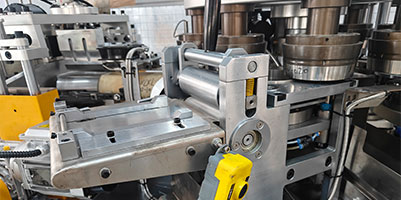
Core Paper Bowl Machine Operations: From Blank to Pre-Formed Shell

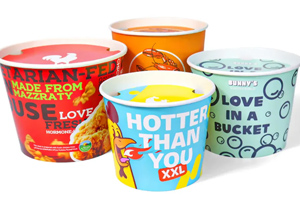

Precision Feeding, Die Cutting, and Creasing for Dimensional Accuracy
The paperboard rolls get fed into the machine through tension control systems that stop them from wrinkling or getting damaged. Photoelectric sensors keep everything lined up properly as it moves along. The rotary die cutters, which have been set for particular weight measurements, stamp out those exact bowl shapes with really tight tolerances around plus or minus 0.2 mm. At the same time, we score crease lines right where they need to be so the fibers deform correctly when folded later on. These scored lines help protect the coatings on the board and reduce stress points in the material. And this matters a lot for food safety because it stops tiny cracks from forming that might let contaminants through the protective layer.
Automatic Forming Mechanics: Synchronized Punching, Folding, and Pre-Shaping
Die cut blanks get moved into the forming molds using compressed air, where conical punches work alongside folding arms and vacuum systems to do their thing together. The punches form the base and sides of the product while the folding arms take those pre creased edges and bend them exactly at right angles. At the same time, vacuum pressure keeps everything tight as it takes shape. All this happens incredibly fast actually, about 0.8 seconds per piece, which means machines can produce around 120 bowls every single minute. When we apply heat between 60 to 80 degrees Celsius during forming, it makes those PE or PLA coatings just soft enough so they bond seamlessly along the edges without making the whole thing weak. What comes out of this process is consistently sized, completely leak proof cylinders ready for bottom sealing. And because each batch matches the last so well, manufacturers report cutting down on waste by roughly 23 percent compared to when workers had to do all this manually back in the day.
Heat Sealing, Rim Reinforcement, and Structural Stabilization
Temperature-Controlled Heat Pressing (180–220°C) for Optimal PE Flow and Seal Integrity
When applying heat press technology, polyethylene coatings get fused onto paperboard through carefully controlled temperature settings typically between 180 to 220 degrees Celsius with contact times ranging from about 1.5 seconds up to 3 seconds. These temperature ranges have been tested extensively in polymer research labs and found to work best for getting the PE material to flow properly into the paper fibers while keeping the base material intact and avoiding any burning issues. Modern equipment comes equipped with automatic temperature sensors that make adjustments as often as 40 times every single second, which helps maintain consistent quality even when working with different batches of materials. What this creates is a really strong bond at the molecular level, where tests show it can resist peeling forces above 8 Newtons per 15 millimeters. This kind of strength means the coating stays put even under demanding conditions like filling containers with hot liquids, something that's become increasingly important across food packaging industries.
Dual-Pressure Rimming Dies and Edge Compression for Leak-Proof Structural Rigidity
Once the sealing is done, the rims go through a step-by-step mechanical reinforcement process. First off, primary dies apply around 25 to 35 MPa of pressure which folds and flattens the top edge. Then comes secondary compression at about 50 to 60 MPa that packs everything tighter and makes the fibers lock together. What we get from this two stage approach is a rim density boost of roughly three times normal levels. This creates a nice smooth radius without any tiny channels or gaps where liquids might start to creep along the surface. When it comes to strength, these reinforced rims can handle up to 12 kPa of sideways force. To put that into perspective, imagine trying to stack fifteen full bowls on them and they still hold up. Plus, they keep their shape even after sitting in hot liquids at 95 degrees Celsius for four whole hours straight. And yes, all this meets those tough ASTM D1709 standards for impact resistance that manufacturers have to follow.
Real-Time Quality Assurance in High-Speed Paper Bowl Machine Production
Automated Defect Detection: Vision Systems, Pressure Testing, and Coating Integrity Checks
Quality control systems now check each bowl as they move along the production line at speeds reaching around 120 pieces per minute. Industrial cameras scan for any cracks, uneven rims, or missing coatings during this process. At the same time, pneumatic tests pressurize the bowls to see if their seals hold up when filled, just like they would be in actual use. Infrared technology also scans the surfaces looking for consistent distribution of PE and PLA materials. All these inspections happen incredibly fast - within milliseconds for each item - which cuts down defects by more than 40 percent compared to older methods that relied heavily on spot checks. When something doesn't pass muster, those faulty bowls get sent off the main line right away. Only the ones that satisfy all requirements for strength against food products, water resistance, and compliance with regulations make it through to final packaging stages.
FAQ
What materials are used in the paper bowl manufacturing process?
The main materials used include paperboard, polyethylene (PE), and polylactic acid (PLA) coatings, which are chosen for their bonding capabilities and ease of forming into leak-proof structures.
How is the dimensional accuracy maintained during production?
Dimensional accuracy is achieved through careful tension control of paperboard rolls, precision rotary die cutting, and the scoring of crease lines, ensuring consistency in bowl shapes and protection of coatings.
What is the significance of temperature-controlled heat pressing?
Temperature-controlled heat pressing ensures the optimal flow and bonding of polyethylene coatings to paperboard, tested for ideal performance between 180 to 220°C to maintain seal integrity and withstand high temperatures during use.